Modular Lab Design: How to Optimize Your Workflow with Flexible Furniture
In the rapidly evolving research landscape of 2026, the shift toward agile, high-throughput methodologies has rendered static laboratory environments obsolete. Modern facilities now prioritize modularity and reconfigurability to accommodate shifting project scopes, varying instrumentation footprints, and rigorous biosafety protocols. This guide explores the technical integration of flexible furniture systems, established under the latest SEFA-8 and ISO 9001:2026 benchmarks, to ensure operational continuity and researcher safety in high-stakes environments.
Ergonomic Engineering and Heavy-Duty Workbenches
The core of any modular lab is the structural integrity of its primary surfaces. In 2026, Workbenches are no longer merely tables; they are engineered platforms designed to mitigate repetitive strain while supporting heavy analytical machinery. High-authority research facilities now specify height-adjustable frames that meet ANSI/BIFMA X5.5 standards, allowing for seamless transitions between seated microscopy and standing sample preparation. The material science of the worksurface is equally critical; Phenolic resin and Type 316 stainless steel are the industry standards for 2026 due to their exceptional non-porosity and resistance to chemical permeation.
When selecting Workbenches, lab managers must evaluate the vibration damping characteristics, especially for mass spectrometry or ultra-microbalance applications. Modern modular units feature integrated gas, air, and data ports, reducing the "cable clutter" that often leads to safety hazards. By utilizing a "plug-and-play" utility interface, these benches allow for a total room reconfiguration in hours rather than weeks, ensuring that institutional growth is never bottlenecked by fixed infrastructure.
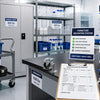
 Advanced modular Workbenches configured with ergonomic height adjustments and chemical-resistant surfaces for 2026 clinical research.
Streamlining Logistics with Lab Carts and Transport
Workflow mobility is the hallmark of a high-efficiency lab. The deployment of specialized Lab Carts & Transport systems allows for the secure movement of sensitive assets between cleanrooms and diagnostic suites. In 2026, the transition toward 304-grade stainless steel transport units is driven by the need for rigorous autoclaving and chemical sterilization. These carts are engineered with precision-bearing casters that meet ISO 14644-1 Class 5 cleanroom requirements, ensuring that no particulate matter is introduced during the transport of sterile reagents or delicate semiconductor wafers.
The technical configuration of Lab Carts & Transport often includes multi-tiered shelving with integrated lips to prevent liquid run-off during accidental spills. For labs handling biological hazards, these units are tested for load-bearing stability under ASTM F2907, ensuring they do not tip during rapid transit. By treating transport hardware as a mobile extension of the workbench, labs can significantly reduce downtime associated with manual material handling and cross-contamination risks.
Safety-Compliant Storage Cabinets and Shelving
Storage strategy in 2026 is governed by the strict segregation of incompatible chemicals and the protection of temperature-sensitive samples. High-capacity Storage Cabinets & Shelving must comply with OSHA 1910.106 and NFPA 30 codes for flammable and corrosive materials. Modular shelving units are now designed with high-density verticality, utilizing epoxy-coated steel to prevent oxidation in high-humidity environments. The integration of self-closing doors and flame arrestors in flammable cabinets is a non-negotiable standard for preventing vapor ignition in the event of an external thermal incident.
Beyond chemical safety, Storage Cabinets & Shelving systems provide the necessary organization for massive inventories of consumables. In 2026, the adoption of "gravity-feed" shelving designs has improved the FIFO (First-In, First-Out) inventory management for reagents with strict expiration dates. By optimizing the vertical footprint of the lab, managers can free up valuable floor space for new automated liquid handlers and robotic workstations, effectively future-proofing the facility's storage capacity.
 Heavy-duty Storage Cabinets & Shelving configured for high-density inventory management and chemical segregation compliance.
Micro-Organization: The Role of Lab Utility Trays
While large furniture pieces provide the framework, the micro-environment is managed through Lab Utility Trays. These organizational tools are essential for maintaining a sterile "Golden Zone" on the workbench. Manufactured from high-impact polystyrene or autoclavable polypropylene, Lab Utility Trays are used to compartmentalize pipettes, vials, and surgical instruments, preventing accidental cross-contamination. In 2026, many trays feature anti-microbial additives embedded in the polymer matrix to inhibit biofilm formation.
The precision of Lab Utility Trays also extends to specialized tasks such as slide staining or cryogenic vial sorting. By standardizing the footprint of these trays, labs can ensure they fit perfectly within modular drawer systems or onto transport carts. This level of granular organization is a key metric in 2026 workflow audits, as it directly correlates with a reduction in manual processing errors and a decrease in the "search time" for critical instruments during time-sensitive procedures.
2026 Performance Matrix and Standards
To assist procurement officers in selecting furniture that meets the rigorous demands of modern research, the following performance matrix outlines the technical benchmarks for 2026:
| Furniture Category | Primary Material Science | 2026 Industry Standard | Performance Metric |
|---|---|---|---|
| Workbenches | Phenolic Resin / 316L SS | SEFA-8 / ANSI X5.5 | Chemical Resistance & Vibration Damping |
| Lab Carts & Transport | 304 Stainless Steel | ISO 14644-1 Class 5 | Particulate Control & Mobility |
| Storage Cabinets | Epoxy-Coated Cold Rolled Steel | NFPA 30 / OSHA 1910.106 | Thermal Barrier & Vapor Sealing |
| Lab Utility Trays | High-Impact Polypropylene | ASTM D256 | Impact Strength & Autoclavability |
Frequently Asked Questions
- Question: How do I determine if my Workbenches meet 2026 vibration standards? For precision microscopy or balances, you should look for benches that are SEFA-certified and feature heavy-gauge steel legs with leveling glides. In 2026, many modular benches also offer integrated passive or active vibration isolation platforms.
- Question: Can Lab Carts & Transport be used in cleanrooms? Yes, provided they are made from 304 or 316 stainless steel and utilize non-marking, ESD-safe casters. These materials allow for the strict disinfection protocols required in ISO-rated environments.
- Question: What is the benefit of phenolic resin over laminate for Workbenches? Phenolic resin is essentially a solid, non-porous slab with high chemical breakthrough times, whereas laminate can delaminate over time when exposed to solvents, creating harborages for contaminants.
- Question: Are Lab Utility Trays compatible with all chemical cleaners? Trays made from polypropylene have high chemical resistance to most acids and bases. However, it is essential to check the material data sheet for compatibility with specific organic solvents used in your facility.
- Question: Why is vertical storage prioritized in 2026 Storage Cabinets & Shelving? Laboratory real estate is becoming increasingly expensive. Verticality allows labs to maximize their inventory capacity without expanding the physical room footprint, maintaining compliance with safety clearance codes.
Optimizing a laboratory for the 2026 research climate requires a transition from permanent fixtures to a modular, "living" environment. Lab managers should conduct an annual audit of their Workbenches for ergonomic compliance and ensure that Storage Cabinets & Shelving satisfy the latest NFPA vapor-control standards. By integrating mobile Lab Carts & Transport and organized Lab Utility Trays, facilities can foster a scalable workflow that adapts to the next generation of scientific discovery. Start your audit by identifying the most static areas of your lab and replacing them with modular solutions that prioritize mobility and material integrity.
-
Posted in
Furniture & Facility