High-Density Inventory Management: Optimizing Floor Space with Compliant Storage and Modular Bench Systems
As we progress through 2026, the demand for high-throughput laboratory output has necessitated a fundamental shift in spatial engineering. Modern facilities must now balance the conflicting requirements of high-density inventory management with the stringent safety mandates of NFPA 45 and OSHA 1910 Subpart S. Optimizing floor space no longer refers merely to square footage, but to the strategic integration of modular systems that ensure both workflow velocity and institutional compliance.
Modular Bench Systems and Ergonomic Optimization
The cornerstone of a high-density laboratory is the technical specification of its Workbenches. In 2026, fixed cabinetry has largely been superseded by modular, height-adjustable systems that allow for rapid reconfiguration as experimental protocols evolve. These benches must adhere to SEFA (Scientific Equipment and Furniture Association) standards, particularly regarding load-bearing capacities and resistance to chemical reagents. High-performance Workbenches utilize Trespa TopLab or epoxy resin surfaces, which offer superior resistance to thermal shock and a zero-permeation rate against aggressive solvents like acetone and nitric acid.
From an engineering perspective, modularity facilitates the "Golden Triangle" of lab ergonomics: the relationship between the technician, the primary instrument, and the requisite consumables. By integrating suspended shelving and integrated power/gas service carriers into the Workbenches, facilities can increase usable surface area by up to 30% without expanding the physical footprint. This density must be managed carefully to maintain OSHA 1910.22 compliance, which requires clear access to emergency equipment and unobstructed egress routes at all times.
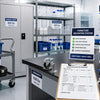
 A high-density 2026 laboratory configuration featuring modular workbenches and vertical storage units designed to meet OSHA clearance codes while maximizing instrument density.
NFPA Compliance and Vertical Chemical Segregation
Efficient inventory management requires more than just physical space; it requires the systematic categorization of hazardous materials according to NFPA 45 and 704 standards. Storage Cabinets & Shelving must be selected based on the flash point and reactivity of the stored chemicals. In 2026, high-density vertical carousels and fire-rated safety cabinets are the standard for maximizing chemical inventory in smaller footprints. These systems utilize ventilated, epoxy-coated steel to prevent the accumulation of volatile organic compounds (VOCs) that could compromise air quality or lead to auto-ignition events.
When implementing Storage Cabinets & Shelving, it is critical to observe chemical compatibility matrices. For example, flammables and oxidizers must be segregated by at least 20 feet or a one-hour fire-rated barrier. Modern high-density storage solutions often incorporate internal bunding or secondary containment within the shelving units to ensure that a breach in one container does not result in a catastrophic cross-reaction. This technical redundancy is essential for meeting the 2026 insurance requirements for laboratory liability and personnel safety.
Intra-Facility Logistics and Transport Protection
A high-throughput lab is a dynamic environment where samples and reagents are in constant motion. The selection of Lab Carts & Transport systems must account for load stability and spill containment. 2026-compliant carts feature deep-well shelving and non-marring, chemical-resistant casters that prevent the vibration-induced fatigue of delicate glass vessels. These transport units often work in tandem with Lab Utility Trays, which serve as the primary containment layer for sample movement.
The material science of Lab Utility Trays has advanced to include high-density polyethylene (HDPE) and polypropylene blends that offer exceptional breakthrough times against corrosive spills. According to ASTM D543, these materials must maintain structural integrity after 24-hour continuous exposure to standard laboratory reagents. By mandating the use of Lab Utility Trays on all Lab Carts & Transport devices, lab managers can effectively localize spills, thereby preventing contamination of the wider facility floor and ensuring adherence to OSHA’s walking-working surfaces standard.
| Infrastructure Component | Primary Material | 2026 Performance Rating | Regulatory Compliance |
|---|---|---|---|
| Heavy-Duty Workbenches | Epoxy Resin / 316 Stainless | SEFA-8 High Chemical Resistance | OSHA 1910.1450 |
| Flammable Storage | 18-Gauge Double-Wall Steel | FM Approved / 10-Min Fire Rating | NFPA 30 / OSHA 1910.106 |
| Transport Carts | Fiberglass Reinforced Polymer | 400lb Dynamic Load Capacity | ANSI/BIFMA X5.5 |
| Secondary Trays | High-Density Polypropylene | >480 Min Breakthrough (Acids) | ASTM D543-20 |
OSHA Clearance Codes and Spatial Infrastructure
Spatial optimization must never occur at the expense of egress and safety clearance. OSHA 1910.37 requires that exit routes be at least 28 inches wide at all points. In a high-density lab, this means that Workbenches and Storage Cabinets & Shelving must be arranged in a manner that accounts for the maximum "extension" of drawers and the footprint of mobile Lab Carts & Transport units. A common 2026 failure in safety audits is the "temporary" obstruction of aisles by mobile equipment.
To mitigate this, the modern lab layout utilizes "parking zones" for carts and dedicated recessed areas for Storage Cabinets & Shelving. Integrating utility services—such as vacuum, compressed air, and data ports—directly into the overhead service panels above the Workbenches removes trip hazards and allows for the dense clustering of equipment. This verticality is the secret to meeting the "Clear Workspace" mandate of OSHA 1910.303, which requires at least 3 feet of clear space in front of electrical panels and high-voltage instrumentation.
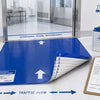
 Advanced chemical segregation within high-density storage cabinets, utilizing secondary lab utility trays to prevent cross-contamination and meet NFPA 45 guidelines.
Audit Strategies for 2026 Infrastructure Readiness
As the fiscal year approaches, lab managers must perform a comprehensive infrastructure audit. This begins with a load-capacity assessment of all Storage Cabinets & Shelving to ensure they have not exceeded their structural limits. Overloading shelving is a frequent cause of "creeping" mechanical failure in lab furniture. Additionally, all Workbenches should be inspected for surface delamination or cracks in the epoxy, which can harbor microbial contamination or lead to chemical pooling.
Finally, the mobility of the facility should be assessed by reviewing the condition of Lab Carts & Transport casters and the integrity of Lab Utility Trays. Any polymer tray showing signs of stress whitening or chemical etching must be replaced to maintain its containment rating. By ensuring that every piece of furniture and transport device meets the 2026 ANSI and OSHA performance benchmarks, lab managers can ensure that their facility remains a safe, efficient, and compliant environment for high-stakes research.
- How does NFPA 45 impact the placement of Workbenches? NFPA 45 dictates the maximum quantities of flammable liquids allowed per lab suite. This affects how many Workbenches can be placed in proximity to chemical workstations and requires that flammable storage is not located near exit paths.
- Can I use standard utility carts for transporting biohazardous materials? No. 2026 standards require Lab Carts & Transport units specifically rated for spill containment, typically featuring lipped shelves and non-porous surfaces that can be fully decontaminated with autoclave-grade disinfectants.
- What is the significance of "Zero-Permeation" for benchtop materials? Zero-permeation ensures that hazardous chemicals cannot seep into the core of the Workbenches. This prevents long-term off-gassing and ensures that the surface can be completely sterilized after a spill.
- Are secondary Lab Utility Trays mandatory for all chemical storage? While not always mandated by code, they are considered a "Best Practice" under ISO 14001 and are often required by local fire marshals to ensure that Storage Cabinets & Shelving do not allow leaks to reach the floor.
Optimizing a high-density laboratory requires a holistic approach that fuses material science with regulatory compliance. Lab managers should conclude their annual audit by ensuring all Workbenches are configured for maximum ergonomic throughput and that all Storage Cabinets & Shelving strictly adhere to NFPA chemical segregation codes. By utilizing Lab Carts & Transport systems and Lab Utility Trays as an integrated containment network, facilities can maintain peak efficiency without compromising on safety. Practical takeaway: Review your aisle clearances today; if a cart cannot pass an open bench drawer without pausing, your lab density has exceeded its safe limit.
-
Posted in
Furniture & Facility