Comprehensive Transport Protection: Utilizing Multi-Layer ESD Antistatic Bags and High-Density Storage
In the 2026 laboratory environment, the miniaturization of bio-sensors and micro-electronics has reached a threshold where traditional electrostatic discharge (ESD) mitigation is no longer a luxury but a fundamental operational requirement. As device architectures shrink, the susceptibility to latent defects—damage that bypasses initial quality control but leads to premature field failure—has increased exponentially. Effectively safeguarding these components during transit and long-term storage requires a sophisticated understanding of polymer science and the implementation of a rigorous ESD Protected Area (EPA) protocol.
The Physics of Electrostatic Discharge and Latent Damage
Electrostatic discharge occurs when two objects of different electrical potentials come into contact or close proximity, resulting in a sudden flow of electricity. For high-density micro-electronics, even a discharge as low as 10V can rupture gate oxides or cause metal-migration defects. The primary challenge in 2026 is "latent damage," where the ESD event melts a microscopic portion of a circuit path without completely severing it. This creates a weakened point that eventually fails under thermal stress or vibration, often after the product has been deployed to the end user.
To combat this, lab managers must utilize materials that provide both dissipative and shielding properties. Static dissipative materials allow charges to flow to ground at a slow, controlled rate, preventing a sudden spark. Shielding materials, conversely, create a Faraday Cage effect, protecting the internal contents from external electromagnetic fields. The integration of these properties into transport consumables is the first line of defense in any institutional ESD control program.
 Scanning electron microscopy illustrating the physical degradation of a micro-circuit following an unshielded static discharge event, highlighting the necessity for multi-layer protection.
Multi-Layer Shielding: The Science of Antistatic Bags
Transporting sensitive components between cleanrooms or facilities requires the use of specialized ESD Antistatic Bags. In 2026, the industry has transitioned away from simple "pink poly" bags, which only prevent tribocharging, toward multi-layer metalized shielding bags. These sophisticated containers typically consist of an inner layer of static-dissipative polyethylene, a core layer of aluminum or nickel shielding, and an outer layer of abrasion-resistant polyester with a dissipative coating.
The performance of ESD Antistatic Bags is measured by their surface resistance (typically between and ohms/square) and their discharge shielding capabilities (measured in nanojoules). According to the 2026 update of ANSI/ESD S541, a high-performance bag must limit the energy penetration to less than 20nJ. Furthermore, the integrity of these bags must be audited for punctures or "scuffed" metal layers, as any break in the conductive core destroys the Faraday Cage effect and exposes the component to potential catastrophic failure.
Establishing a Grounded EPA with Mats and Straps
Safe handling begins at the workstation. Before a technician ever touches a sensitive bio-sensor, they must be integrated into the laboratory's common point ground. This is achieved through the dual use of ESD Wrist Straps and ESD Floor Mats. A high-quality wrist strap provides a direct, current-limited path (typically through a 1-megohm resistor) from the operator's skin to the ground, ensuring that the human body—the primary generator of static in the lab—remains at zero potential.
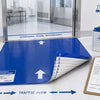
Simultaneously, ESD Floor Mats provide a secondary grounding path for mobile personnel and equipment. Modern mats are dual-layer: a dissipative top layer for safe charge removal and a highly conductive bottom layer for efficient connection to the floor's grounding grid. In high-traffic 2026 labs, these mats must be tested daily using a surface resistance meter to ensure that accumulation of dust or chemical cleaners has not compromised their conductivity. The synergy between ESD Wrist Straps and mats creates a "Static-Safe Zone" where components can be safely removed from their shielding for assembly or testing.
High-Density Conductive Storage and Compliance
Long-term storage of micro-electronics requires more than just environmental climate control; it requires "electromagnetic climate control." ESD Storage Containers are engineered using carbon-loaded or inherently dissipative polymers to ensure that the container itself does not become a source of static. High-density storage solutions in 2026 often utilize modular, stackable bins that feature conductive lids to provide 360-degree shielding for the contents within.
When selecting ESD Storage Containers, procurement officers must differentiate between "Antistatic" (prevents charging), "Dissipative" (slowly removes charge), and "Conductive" (quickly removes charge). For the most sensitive Class 0 devices (susceptible to <100V), a conductive storage system is mandatory. These containers must also meet the chemical outgassing standards of ISO 14644 to ensure that the carbon additives do not contaminate the cleanroom atmosphere or lead to the corrosion of sensitive sensor contacts over time.
 A modern high-density EPA featuring grounded shelving units and conductive storage containers, providing multi-point protection for high-value biological and electronic sensors.
2026 ANSI/ESD and ISO Compliance Frameworks
Compliance in the current year is anchored by the ANSI/ESD S20.20-2026 standard, which provides the administrative and technical requirements for establishing an ESD Control Program. This standard mandates that all ESD-sensitive items be handled, transported, and stored within a defined EPA, with documented evidence of daily testing for ESD Wrist Straps and monthly verification for ESD Floor Mats and containers. Failure to maintain these records can result in the loss of ISO 9001 or ISO 13485 certification.
Furthermore, international transport of electronic components now often requires compliance with IEC 61340-5-1. This ensures that ESD Antistatic Bags used in trans-oceanic shipping can withstand the extremes of humidity and pressure without their dissipative coatings migrating or losing efficacy. Lab managers must verify that their suppliers provide lot-traceable data for all ESD consumables to ensure that the material integrity remains consistent with these global standards.
| ESD Control Category | Primary Material Science | Target Surface Resistance (Ω) | 2026 Compliance Standard |
|---|---|---|---|
| Shielding Bags | Metalized Polyester/PE | 10^4 - 10^{11} | ANSI/ESD S541 |
| Workstation Mats | Dual-Layer Nitrile Rubber | 10^6 - 10^9 | ANSI/ESD S4.1 |
| Personnel Grounding | Conductive Fabric/1MΩ Resistor | < 3.5 x 10^7 | ANSI/ESD S1.1 |
| Storage Bins | Carbon-Loaded Polypropylene | < 10^5 | IEC 61340-5-3 |
Frequently Asked Questions
- What is the difference between a "pink poly" bag and a metalized shielding bag? Pink poly bags are only antistatic, meaning they do not generate charge when rubbed (low tribocharging), but they do not block external static fields. Metalized ESD Antistatic Bags provide a conductive layer that shields the internal component from external high-voltage discharges.
- How often should I replace my ESD Floor Mats? While high-quality mats are durable, they should be replaced if their surface resistance exceeds ohms or if they show signs of physical warping or chemical degradation that prevents them from lying flat, which creates both a safety hazard and a grounding gap.
- Can I use any container for storage as long as it is in a grounded room? No. The container itself must be dissipative or conductive. A standard plastic bin is an insulator; even in a grounded room, it can hold a static charge that can discharge into your component the moment a grounded technician touches it. Always use certified ESD Storage Containers.
- Why is the 1-megohm resistor in ESD Wrist Straps important? The resistor is a safety feature for the human operator. It is high enough to limit current flow to a safe level in case of accidental contact with mains electricity (AC), but low enough to allow static charges to bleed off to ground instantaneously.
To navigate the complexities of ESD protection in the coming year, lab managers must transition from reactive to proactive protocols. A comprehensive audit should begin with a surface resistance survey of all existing ESD Floor Mats and a verification of the discharge shielding ratings on all ESD Antistatic Bags in stock. By standardizing on high-density ESD Storage Containers and ensuring that ESD Wrist Straps are tested at the start of every shift, labs can significantly reduce the incidence of latent failures. Institutional excellence is built on these microscopic defenses. Would you like me to help you develop a customized EPA testing log for your facility?
-
Posted in
Furniture & Facility