Field-to-Lab Stability: Managing Specimen Recovery and Logistics with Advanced Sampling Kits
In the analytical landscape of 2026, the veracity of forensic and clinical data is inextricably linked to the molecular integrity of the specimen at the point of collection. As genomic sequencing and mass spectrometry sensitivities reach nanolar thresholds, the technical requirements for specimen recovery have moved beyond simple collection to complex stabilization. Maintaining the "field-to-lab" chain of custody now demands a rigorous adherence to material science standards that prevent nucleic acid degradation and cross-contamination during the critical transport window.
Material Science: Elution Rates and Tip Morphology
The efficiency of specimen recovery is dictated by the interaction between the analyte and the applicator tip. Traditional cotton-tipped applicators are increasingly obsolete in 2026 due to the presence of internal fatty acids and the tendency for "sample entrapment" within the organic fibers. High-performance Sterile Swabs now utilize flocked technology, where short nylon strands are sprayed onto the applicator tip using an electrostatic field. This perpendicular alignment creates a high-surface-area brush that facilitates rapid hydraulic capillary action, significantly increasing both collection volume and elution efficiency.
For applications involving chemical surface sampling or high-viscosity biological fluids, Foam Applicators provide a superior alternative. These tips are manufactured from medical-grade polyurethane foam with a controlled pore size (typically measured in microns). The reticulated structure of Foam Applicators allows for the physical entrapment of larger cellular structures while remaining chemically inert. In 2026, these applicators are engineered with specific breakthrough times for transport media, ensuring that the specimen does not bond irreversibly to the polymer matrix, thereby maximizing the "recovery yield" during laboratory processing.
 Scanning electron microscopy reveals the open-cell architecture of 2026-grade sterile swabs, designed for instantaneous sample elution and zero-residue recovery in forensic workflows.
Transport Window Integrity and Specimen Logistics
Specimen degradation typically occurs due to enzymatic activity (nucleases) or environmental fluctuations during transit. To mitigate this, modern Sampling Kits integrate specialized transport media designed to lyse cells immediately and stabilize RNA/DNA for up to 30 days at ambient temperatures. This eliminate the "cold chain" requirement, which has historically been the primary source of sample loss in field-to-lab logistics. In forensic contexts, where DNA might be present in trace amounts, the use of Sampling Kits with integrated desiccants is mandatory to prevent microbial growth that can mask the target profile.
The permeation rates of the transport vessels included in Sampling Kits are a critical 2026 technical specification. High-density polyethylene (HDPE) or medical-grade polypropylene vessels must demonstrate a moisture vapor transmission rate (MVTR) that ensures no significant concentration change in the transport buffer over a 72-hour window. This is governed by ASTM D1434 standards, which provide the framework for gas and vapor permeability testing in medical-grade packaging used for specimen transport.
2026 Forensic and Clinical Compliance Standards
Institutional compliance for specimen recovery is governed by ISO 18385:2026, which specifies the requirements for "DNA-free" products. This standard is significantly more rigorous than "sterile" (SAL ), as it requires the absence of human DNA, DNase, and RNase. When procurement officers select Sterile Swabs for forensic use, they must verify that the manufacturing process occurs in an ISO Class 5 cleanroom with robotic handling to eliminate the risk of human-derived contamination.
Furthermore, clinical research involving pathogen detection must adhere to CLSI M40-A2 standards, which define the survival criteria for microorganisms in transport systems. Sterile Swabs utilized in these settings are tested for their ability to maintain aerobic and anaerobic organism viability for at least 48 hours. The use of Foam Applicators in these kits is often preferred for environmental sampling due to their ability to withstand the mechanical shearing forces required to liberate biofilms from textured surfaces without degrading the polymer tip.
| Supply Type | Primary Material Science | 2026 Elution Efficiency | Compliance Standard |
|---|---|---|---|
| Flocked Sterile Swabs | Nylon 6,6 / ABS Shaft | >95% (Aqueous) | ISO 18385 / M40-A2 |
| Polyurethane Foam Applicators | 100 PPI Reticulated Foam | >88% (Viscous) | ASTM D3574 |
| Forensic Sampling Kits | Multi-Layer HDPE / Tyvek | N/A (Stabilization focus) | ISO 20988 / OSHA 1910 |
| DNA-Free Collection Tubes | Low-Binding Polypropylene | N/A (Retention focus) | CLSI GP44-A4 |
Optimizing Specimen Recovery via Standardized Kits
The fragmentation of sampling supplies often leads to procedural errors in the field. To minimize variable introduction, high-throughput labs are standardizing on integrated Sampling Kits. These kits provide a validated combination of Sterile Swabs, pre-measured transport buffers, and barcoded labeling systems. This integration ensures that the "dead volume" (the volume of liquid remaining in the swab after elution) is accounted for in the laboratory's calculation of the final analyte concentration.
Moreover, Sampling Kits engineered for 2026 requirements often include tamper-evident seals that meet ISO 17712 standards. This is particularly vital in forensic logistics, where the physical security of the sample is as critical as its biological stability. By utilizing Foam Applicators within these kits for larger surface areas and flocked swabs for mucosal or trace evidence, investigators can ensure a multi-modal recovery strategy that addresses the full spectrum of possible evidentiary materials.
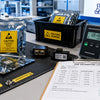
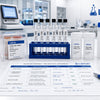
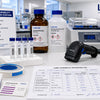
 A comprehensive 2026-grade sampling kit layout, demonstrating the integration of high-recovery sterile swabs and tamper-evident transport vessels for forensic chain of custody.
Mechanical Reliability and Chemical Inertness
Mechanical failure during collection is a safety risk and a source of sample contamination. 2026 standards require that Sterile Swabs and Foam Applicators feature molded breakpoint technology. This allows the applicator shaft to be snapped cleanly at a pre-defined point, ensuring that the tip fits perfectly into the transport tube without the need for scissors, which are a notorious source of cross-contamination. The shaft material—typically a polystyrene or ABS blend—must be tested for chemical inertness to ensure that no plasticizers (like phthalates) leach into the specimen and interfere with LC-MS/MS analysis.
The adhesive used to bond the foam or fibers to the shaft is another critical point of evaluation. In high-performance Foam Applicators, thermal bonding is preferred over chemical adhesives. Chemical glues can introduce organic contaminants or cause the tip to detach when exposed to high-solvent transport media. By opting for thermally bonded applicators, lab managers ensure that the specimen integrity is not compromised by the tool used to collect it, even when the transport window is extended due to logistical delays.
- Why is the "breakthrough time" important for transport media in foam applicators? The breakthrough time refers to how long it takes for the transport liquid to fully saturate the foam pores. For optimal recovery, the Foam Applicators must allow for rapid saturation and subsequent release. If the breakthrough time is too high, the specimen may remain trapped in the internal pores of the foam.
- Does "DNA-Free" certification include viral RNA? ISO 18385:2026 focuses on human DNA to prevent "adventitious" contamination. However, many Sampling Kits are also certified RNase-free, which is essential for protecting viral RNA during transport for pathogens like Influenza or SARS-CoV-x.
- Can I use Sterile Swabs for surface sampling in a Grade A cleanroom? Yes, provided they are flocked or foam. Traditional cotton or rayon Sterile Swabs are often prohibited in Grade A environments due to the risk of particulate shedding, which violates ISO 14644-1 cleanroom standards.
- What is the advantage of a barcoded Sampling Kit? Barcoding at the point of collection ensures "cradle-to-grave" traceability. When Sampling Kits are pre-barcoded, the risk of clerical error during lab intake is virtually eliminated, securing the forensic chain of custody.
Managing specimen recovery for the coming year requires a transition from generic collection tools to scientifically validated recovery systems. Lab managers should audit their current inventory to ensure that all Sterile Swabs meet ISO 18385:2026 DNA-free standards and that Foam Applicators are thermally bonded to prevent adhesive contamination. For facilities handling high-stakes forensic or clinical samples, the implementation of integrated Sampling Kits is the most effective way to eliminate logistical variables and ensure data reproducibility. Would you like me to help you analyze the elution efficiency data for your current swab fleet to determine if an upgrade to flocked technology is required for your specific assays?
-
Posted in
Life Sciences & Clinical