Audit-Ready Thermal Mapping for Bench Equipment: A NIST-Traceable Program for Hotplates, Cold Blocks, Thermometers, and Refractometers
Thermal control is now a procurement, quality, and audit-readiness issue—not only an equipment specification. In modern laboratories, hotplates, cold blocks, thermometers, probes, and refractometers must support documented repeatability across sample preparation, concentration checks, temperature-sensitive workflows, and quality-control release decisions. A bench device that reaches a setpoint is not automatically fit for regulated work; the lab must verify heat distribution, drift, probe placement, calibration status, and measurement uncertainty. A disciplined thermal mapping program helps lab managers reduce method variation, defend results during audits, and select equipment based on measurable performance rather than catalog claims.
Thermal Control as a Quality Risk
Thermal mapping is the controlled evaluation of temperature behavior across equipment surfaces, wells, sample zones, or measurement interfaces. For bench equipment, the most common failure is not catastrophic malfunction. The more common risk is silent drift: a hotplate surface that reads correctly at the controller but runs several degrees hotter near the center, a cold block that stabilizes slowly after sample loading, or a refractometer that produces inconsistent concentration values because temperature compensation was never verified.
This is why the category of Lab Equipment & Hardware should be managed as a connected measurement system. A laboratory may purchase a hotplate, thermometer, and refractometer separately, but the audit trail must show that the workflow performs as a system. A technician heating a buffer, cooling aliquots, checking temperature with a probe, and confirming concentration with a refractometer is working across multiple measurement points. Each point can contribute uncertainty.
Thermal inconsistency affects viscosity, solubility, reaction kinetics, evaporation rate, density, and refractive index. A small temperature bias can be enough to change apparent concentration in sugar, saline, solvent, or process-control samples. In research settings, it can also alter reproducibility across batches, operators, or instruments. For procurement officers, the practical question is not simply “Does this device heat or cool?” The better question is, “Can this device support documented temperature control at the points where the sample actually experiences heat transfer?”
Define the Controlled Zone, Not Just the Equipment
A hotplate controller measures or estimates temperature from a sensor location inside the instrument. The sample, however, experiences temperature at the vessel bottom, fluid boundary layer, or immersion zone of the probe. A cold block may list a nominal temperature range, but the sample sees a thermal gradient influenced by tube geometry, fill volume, block material, air gaps, and operator handling time. Thermal mapping closes this gap by measuring the working zone under defined loading conditions.
For professional workflows, define at least three controlled zones: the equipment output zone, the sample contact zone, and the verification zone. The equipment output zone is the hotplate surface, cold block well, or refractometer prism. The sample contact zone is the vessel, tube, probe immersion depth, or sample film. The verification zone is the location where the reference thermometer or calibrated probe confirms performance. When these zones are not defined, the lab may calibrate the wrong location and still generate unstable results.
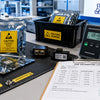
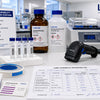
 A clean laboratory bench showing a digital hotplate, calibrated temperature probe, cold block, refractometer, and a printed calibration worksheet used for audit-ready thermal mapping.
 NIST Traceability and ISO-Aligned Documentation
A NIST-traceable program is built around measurement results, not marketing language. NIST describes metrological traceability as an unbroken chain of calibrations to specified reference standards, with measurement uncertainty carried through the chain. ISO/IEC 17025 is the core international framework used by testing and calibration laboratories to demonstrate competence and generate valid results. :contentReference[oaicite:0]{index=0}
For bench equipment, this means the lab should maintain calibration certificates for reference thermometers, probes, refractometers, and any secondary standards used to verify working equipment. The certificate should identify the instrument, calibration date, due date, reference standards used, environmental conditions when relevant, measurement points, correction factors, and uncertainty. A label that says “calibrated” is helpful for inventory control, but it is not a complete technical record.
What an Audit-Ready Calibration Record Should Contain
A strong calibration record links the bench instrument to the actual method requirement. For example, if a buffer preparation method requires 60 °C ± 2 °C, the hotplate verification should include a measurement near that setpoint, not only a generic high-temperature calibration point. If refrigerated sample handling requires 2–8 °C, the cold block or cooling accessory should be verified under realistic sample loading, not only in an empty state. If a refractometer supports incoming raw-material checks, its calibration record should match the concentration range used for release decisions.
The most defensible records include as-found and as-left results. As-found data shows whether the instrument was still operating within tolerance before adjustment. As-left data shows condition after calibration or correction. This distinction matters when evaluating historical test results. If a thermometer is found out of tolerance, the lab may need to assess whether previous batches, research runs, or incoming material checks were affected.
Recommended Verification Intervals
Calibration intervals should reflect risk, use frequency, environmental exposure, and criticality. A refractometer used daily for product release requires tighter review than one used occasionally for training. A hotplate exposed to corrosive vapors, spills, or continuous high-temperature operation may drift faster than one used for low-temperature mixing. A digital thermometer used as a reference device should receive formal calibration at a defined interval, while working probes can be checked against the reference on a shorter internal schedule.
A practical program separates primary reference devices, secondary verification devices, and working instruments. The primary reference carries the strongest traceability documentation. Secondary devices are checked against the reference. Working instruments are verified at use points and removed from service when they exceed acceptance limits. This hierarchy lowers cost while preserving audit control.
Mapping Hotplates, Cold Blocks, and Probes
Magnetic Stirrers & Hotplates should be evaluated for surface uniformity, overshoot, stabilization time, stirring effect, load sensitivity, and controller offset. A hotplate may stabilize quickly when empty but respond differently when loaded with a glass beaker, aluminum block, stainless vessel, or viscous fluid. Thermal mass changes the time constant of the system, and stirring changes convective heat transfer inside the sample.
Mapping should include the center and perimeter zones, especially when multiple vessels are heated at the same time. Ceramic-glass surfaces often provide chemical resistance and easy cleaning, but heat transfer can vary depending on contact area and vessel flatness. Aluminum-top hotplates can transfer heat efficiently but may be more vulnerable to corrosion from aggressive spills unless the surface is protected. For regulated preparation work, the equipment selection should match the chemical environment as well as the temperature range.
Probe Placement and Immersion Depth
Thermometers and temperature probes must be treated as measurement instruments, not accessories. A probe tip placed against the vessel wall can read differently from one suspended in the fluid center. A shallow immersion depth can bias readings because the stem conducts heat away from the sensing element. For stirred samples, the probe should be positioned to avoid the stir bar vortex and vessel wall while remaining in the representative fluid zone.
Digital thermometers and temperature probes should be selected based on range, resolution, accuracy, response time, probe sheath material, chemical compatibility, and calibration availability. Stainless steel probes are common for general aqueous workflows, while PTFE-coated or chemically resistant probes may be preferred for corrosive environments. Probe cables should also be evaluated because insulation materials can harden, swell, or crack when exposed to solvents, oils, or repeated heat cycles.
Cold Blocks and Thermal Control Accessories
Thermal Control & Cooling products require the same discipline as heating devices. Cold blocks, cooling racks, and temperature-control accessories can introduce variation when tube fit is poor, sample volumes differ, or operators leave samples exposed during staging. A block with excellent nominal performance can still underperform if there is excessive air space between the tube wall and block well.
For mapped cooling workflows, document the starting temperature, sample volume, tube type, loading pattern, exposure time, and endpoint temperature. High-throughput labs should define maximum bench exposure time before samples return to controlled storage. This is especially important when temperature-sensitive samples are staged for aliquoting, refractive index checks, viscosity-sensitive preparation, or analytical transfer.
Refractometers and Temperature Compensation
Refractometers convert optical behavior into concentration or refractive index data. ASTM D1218 covers refractive index measurement for transparent and light-colored hydrocarbons over a defined temperature range and recognizes refractive index as a fundamental physical property for characterizing pure hydrocarbons and mixtures. :contentReference[oaicite:1]{index=1} While not every lab sample falls under that method, the principle is broadly relevant: refractive index is temperature-sensitive and must be controlled or corrected.
Automatic temperature compensation can improve workflow efficiency, but it does not remove the need for verification. Compensation algorithms are typically based on assumed sample behavior. A sugar solution, solvent blend, protein matrix, coolant, and cleaning concentrate may not respond identically to temperature. For professional use, verify the refractometer with standards near the working range and document the sample temperature or compensation mode used.
Prism Cleanliness and Sample Film Control
Refractometer variation often comes from the interface between the sample and prism. Residue, evaporative concentration, bubbles, particulate contamination, and incomplete coverage can distort the optical boundary. For high-throughput quality checks, define a cleaning solvent, lint-free wipe protocol, sample volume, stabilization time, and acceptance range. The prism should be inspected before each measurement series, especially when switching between samples with different viscosities or solute loads.
Digital refractometers reduce operator interpretation compared with visual instruments, but they still depend on sample presentation. A consistent sample film supports repeatable optical measurement. If the lab measures volatile samples, the method should limit the time between sample placement and reading. If the lab measures viscous samples, the method should define how the sample is spread over the prism without trapping air.
 A digital refractometer being verified with a calibration standard beside a temperature probe, sample pipette, and controlled QC worksheet.
 Materials, Chemical Resistance, and Thermal Stability
Material selection determines how equipment performs after repeated exposure to heat, cooling cycles, cleaning agents, and chemical spills. A polished stainless probe sheath can provide durability and cleanability, but chloride-rich or acidic environments may require closer inspection for corrosion. PTFE and FEP coatings provide strong chemical resistance for many aggressive liquids, but they can slow thermal response because polymer layers add thermal resistance. Silicone cable insulation remains flexible across many temperature ranges but can swell in some solvent environments.
Hotplate surfaces also require material matching. Ceramic-glass tops resist many chemical spills and provide a cleanable surface, but they are vulnerable to impact damage and may not provide identical heat transfer with every vessel. Aluminum surfaces conduct heat efficiently and respond quickly, but they require protection from corrosive reagents. Stainless accessories offer mechanical robustness, yet their thermal conductivity differs from aluminum. These differences matter when the lab compares setpoint, surface temperature, and actual liquid temperature.
Thermal Mass and Recovery Time
Thermal mass affects recovery after a cold sample, room-temperature vessel, or large batch is added. A low-mass system may heat quickly but overshoot or fluctuate under load. A high-mass block may stabilize evenly but respond slowly to setpoint changes. Procurement teams should request recovery-time data or perform internal qualification with representative loads. The best instrument is not always the fastest; it is the one that returns to the required control band predictably and repeatedly.
The same principle applies to cooling. A lightweight rack may be easy to handle but lose temperature quickly on the bench. A dense cold block may preserve temperature longer but require extended preconditioning. For controlled workflows, specify not only the nominal temperature range but also the hold time, loading pattern, and maximum acceptable sample warming during normal handling.
Procurement Specifications and Performance Tiers
Procurement should translate quality requirements into equipment specifications. The correct purchasing file should include the intended use, required temperature range, control tolerance, calibration documentation, probe or accessory compatibility, chemical exposure profile, cleaning method, and replacement-part availability. Equipment Parts & Acc. should be included in the planning process because missing probes, adapters, cords, blocks, clamps, or replacement accessories can stop a validated workflow as quickly as a failed instrument.
A strong bench program also defines what does not require high-end qualification. Not every hotplate needs the same tolerance. Not every thermometer needs the same uncertainty. A training bench, general preparation station, and release-testing area should not carry identical procurement requirements. Tiering equipment by risk helps labs spend where traceability matters most while still maintaining consistent inventory control.
| Workflow Tier | Typical Equipment | Critical Specification | Verification Method | Documentation Expectation |
|---|---|---|---|---|
| General Preparation | Standard hotplates, basic probes, cooling racks | Operational range, visible condition, stable control | Routine function check against a working thermometer | Inventory record, maintenance log, user inspection checklist |
| Controlled Sample Handling | Digital hotplates, cold blocks, calibrated thermometers | Control band at method temperature, recovery time, probe compatibility | Mapped verification at representative loads and setpoints | As-found/as-left results, correction factors, defined interval |
| Quality-Control Release | Refractometers, reference probes, validated thermal accessories | Measurement uncertainty, temperature compensation, standard verification | Traceable standard check near working range before use or by schedule | Certificate, method reference, acceptance criteria, deviation procedure |
| Audit-Critical Reference | Primary reference thermometer, reference standards, master devices | Traceability chain, uncertainty budget, limited access control | Formal calibration by competent provider with defined scope | Calibration certificate, uncertainty statement, environmental conditions, approval record |
How to Write Better Purchase Specifications
For hotplates, specify temperature range, control resolution, surface material, top-plate dimensions, load capacity, external probe compatibility, over-temperature protection, and stirring capacity when applicable. For thermometers, specify probe type, sheath material, measurement range, accuracy, resolution, response time, calibration points, and certificate requirements. For cooling accessories, specify material, tube compatibility, preconditioning conditions, hold time, and cleaning resistance. For refractometers, specify measurement scale, refractive index or Brix range, automatic temperature compensation, calibration standard compatibility, sample volume, prism material, and cleaning requirements.
The best procurement files also include lifecycle controls. Define spare probes, replacement adapters, cleaning supplies, calibration labels, and retirement criteria. A cracked ceramic top, corroded probe sheath, damaged cable, drifting refractometer, or warped block should trigger review before it compromises data. A laboratory that tracks these conditions can replace equipment based on risk instead of waiting for failure.
FAQs
- What is the difference between calibration and thermal mapping? Calibration compares an instrument or sensor against a reference standard under defined conditions. Thermal mapping evaluates temperature distribution across the actual working area, such as a hotplate surface, cold block wells, or sample-contact zone. A calibrated controller can still produce uneven working temperatures, so critical workflows often require both.
- Does NIST traceability mean NIST calibrated my instrument directly? Not necessarily. NIST traceability means the measurement result can be connected through an unbroken calibration chain to recognized standards, with uncertainty documented. The lab or calibration provider must maintain records that support the claim; the phrase alone is not a substitute for a complete certificate.
- How many temperature points should be used for verification? Verification points should match the method risk. A general thermometer may need a limited check near the operating range. A reference device or critical workflow instrument should be verified at multiple points that bracket the actual use range. For hotplates and cold blocks, include spatial locations as well as setpoints.
- Why does a hotplate setpoint differ from the sample temperature? The controller does not measure the exact temperature inside the sample. Vessel material, vessel shape, fluid volume, stirring speed, surface contact, room airflow, and probe placement all affect the sample temperature. This is why validation should measure the sample or representative load, not only the displayed setpoint.
- When should a refractometer be checked with standards? Check the refractometer before critical measurement series, after cleaning issues, after impact, when results drift, and at a defined schedule based on use frequency. Standards should be selected near the working range so the verification reflects real sample decisions.
- Which products should be grouped into a thermal control procurement program? Group heating, cooling, measurement, and verification products together. A practical program includes Magnetic Stirrers & Hotplates, Thermal Control & Cooling, Thermometers, Refractometers, and supporting Equipment Parts & Acc..
Closing Audit
A practical audit starts with three actions. First, inventory every thermal-control and temperature-measurement device by use category: general preparation, controlled sample handling, quality-control release, or reference service. Second, match each device to its required evidence: calibration certificate, thermal map, standard verification, cleaning record, or replacement-part log. Third, close the highest-risk gaps first by verifying sample-contact temperatures, confirming NIST-traceable documentation, and standardizing accessories that affect heat transfer. This approach turns bench equipment into a defensible measurement system and gives lab managers a clear path for upgrading hardware, documentation, and workflow reliability.
-
Posted in
Lab Equipment & Microscopy