Static-Safe Sample and Device Handling: Building a Controlled ESD Workflow for Laboratory Storage, Transport, and Floor Zones
Static control is no longer limited to electronics manufacturing benches. Modern laboratories handle static-sensitive sensors, diagnostic cartridges, microfluidic devices, powders, films, optical components, circuit-board assemblies, and precision consumables that can be damaged or disrupted by uncontrolled charge. A static-safe workflow must control packaging, storage, floor surfaces, grounding paths, charge decay, and material movement across the facility. Treating ESD as a measurable program helps lab managers protect sensitive devices, reduce handling variation, and align procurement decisions with current standards for controlled laboratory operations.
Static Risk in Modern Laboratory Workflows
Electrostatic discharge can damage devices, disrupt measurements, attract particles, and create inconsistent handling behavior long before a visible spark occurs. In a laboratory, static risk may appear during storage, transport, weighing, sample transfer, sensor handling, packaging removal, or movement across flooring. The most vulnerable workflows often involve small components, low-mass powders, microfluidic devices, diagnostic strips, semiconductor-adjacent sensors, optical films, and packaged electronics used in analytical systems.
This makes ESD & Static Control a facility and workflow category, not only a packaging category. A lab may buy antistatic bags and assume the risk is controlled, but static-safe handling also depends on the floor zone, operator movement, storage container material, humidity, grounding method, cart movement, and whether the item remains protected after it leaves its packaging. The strongest programs define a controlled path from receiving to storage, staging, use, return, and disposal.
Static failures can be difficult to diagnose because damage may be latent. A device may pass an incoming visual inspection and then fail early in service. A diagnostic component may show unstable signal behavior after uncontrolled handling. A powder may cling to containers or tools, altering transfer efficiency. A microfluidic part may attract particles at the surface and introduce contamination into a test channel. These are operational failures, not only electrical failures.
Static Control Is a System, Not a Single Product
Static-safe handling requires a linked system of packaging, personnel behavior, grounded surfaces, storage, transport, and verification. A dissipative storage container cannot protect a component if it is placed on an insulating floor mat after removal. A floor mat cannot protect a sensor if the item is transported in a charge-generating plastic tote. An antistatic bag cannot preserve device integrity if staff open it outside the controlled zone and place the contents on an unverified work surface.
The procurement objective is to specify the full control chain. That includes the ESD bag or container, floor mat, grounded bench surface, cart or tray, labels, storage bins, and operator procedure. Static control becomes defensible when the lab can show that every transfer point has an approved material and a defined handling rule.
 A clean static-safe laboratory station showing ESD antistatic bags, ESD-safe storage containers, a grounded floor mat, grounding cord, sensitive diagnostic components, and a workflow checklist for receiving, staging, storage, and controlled handling.
 ANSI/ESD S20.20, IEC 61340, and Program Control
ANSI/ESD S20.20 provides a widely recognized framework for developing an electrostatic discharge control program for activities that handle electrical or electronic parts, assemblies, and equipment susceptible to ESD damage. IEC 61340 concepts similarly support classification, measurement, and control of electrostatic properties in protected environments. For laboratories, these standards provide a practical structure: define the protected area, identify susceptible items, select control materials, verify performance, train personnel, and document compliance.
Laboratories do not need to operate like electronics factories to benefit from this framework. The same logic applies to electronics-adjacent laboratory assets: biosensor cartridges, electrode modules, analytical instrument boards, semiconductor test parts, microfluidic chips with embedded conductors, optical sensors, powder-sensitive weighing workflows, and static-sensitive packaging. The standardization value comes from measurable controls rather than assumptions.
Define the ESD Protected Area
An ESD protected area is a defined zone where static-sensitive items are handled under controlled conditions. It may be a bench, cart, storage shelf, receiving station, clean assembly table, floor zone, or full room. The key requirement is boundary clarity. Staff should know where static-sensitive items may be opened, where they must remain packaged, and which surfaces are approved for direct contact.
The protected area should have visible signage, approved storage containers, grounded or dissipative surfaces, verified floor mats where required, and a clear procedure for moving items in and out. If a device leaves the protected area, it should return to approved packaging or a controlled transport container. This prevents uncontrolled handoffs between receiving, storage, and use.
Verification Turns Static Control Into Evidence
A static-control program should include periodic checks of surfaces, floor mats, containers, wrist straps if used, grounding points, and packaging condition. Verification intervals should reflect risk and use frequency. A low-risk storage shelf may require periodic inspection and material confirmation. A high-use handling station may require more frequent resistance checks, visual inspection, and operator training review.
Records should identify location, item type, test method, measured result, acceptance limit, technician, date, and corrective action. If a mat, container, or grounding path fails verification, the lab should remove it from service or downgrade it to non-critical use until corrected.
Surface Resistance, Charge Decay, and Grounding Paths
Static-safe materials are often described as conductive, dissipative, antistatic, or insulative. These terms should not be used interchangeably. Conductive materials allow charge to move quickly. Dissipative materials allow charge to bleed away in a controlled manner. Antistatic materials reduce charge generation. Insulative materials retain charge and can create uncontrolled discharge risk.
Surface resistance describes how readily charge moves across a material surface. Charge decay describes how quickly a charged material loses its charge under defined conditions. Grounding paths provide a controlled route for charge to move away from the protected item or work surface. A good static-safe workflow uses materials that dissipate charge without creating abrupt discharge or damaging sensitive devices.
Why “Antistatic” Alone Is Not Enough
The word antistatic can describe materials that reduce charge generation, but it does not automatically mean the item is suitable for direct contact with every ESD-sensitive device. Packaging may be shielding, dissipative, or low-charging depending on construction. Storage containers may reduce triboelectric charging but still require a grounded surface or defined handling procedure. Floor mats may be dissipative but ineffective if they are not grounded or if their surface is contaminated.
Procurement specifications should use measurable properties when possible. For example, define whether the item requires static shielding, dissipative surface resistance, low-charging behavior, humidity tolerance, cleanroom compatibility, or grounding compatibility. The approved product list should state where the item may be used and what limitations apply.
Grounding Path Integrity
A grounding path is only useful when it remains continuous and correctly connected. Floor mats, bench mats, carts, shelving, and storage racks may require ground cords or verified contact with a grounded surface. Dirt, wax, floor finishes, loose snaps, damaged cords, worn mat layers, or painted surfaces can interrupt the intended path.
The lab should define inspection points: ground cord attachment, mat condition, floor contact, surface cleanliness, container contact, and whether the item remains within the approved zone. A visual label saying “ESD safe” does not prove current performance. Periodic verification provides the evidence.
Antistatic Bags and ESD-Safe Storage Containers
ESD Antistatic Bags provide protection during storage, receiving, staging, and transport. Different bag constructions support different control objectives. Static-shielding bags help protect contents from external electrostatic fields. Low-charging or antistatic bags reduce charge generation during handling. Moisture-barrier or specialty bags may be required when humidity, corrosion, or contamination risk must also be controlled.
A bag should be selected by item sensitivity, storage duration, transport risk, humidity exposure, labeling requirement, closure method, and whether the item will be opened inside an ESD protected area. A bag with the wrong material or poor closure can create a false sense of security. Reused bags should be inspected for punctures, tears, creases, delamination, seal failure, residue, and label confusion.
Storage Containers as Controlled Handling Assets
ESD Storage Containers support repeatable handling when parts or samples move between rooms, benches, carts, or storage locations. They should protect against static generation, uncontrolled contact, particle contamination, and identity loss. The container should also fit the item without forcing compression, bending, or abrasion.
The container specification should identify material type, surface resistance range, lid design, stackability, cleanability, divider compatibility, label area, and whether the container is approved for direct contact with sensitive items. For high-value components, use position maps or dividers to preserve identity and prevent parts from rubbing together during movement.
Transport Path Control
Static-sensitive items often travel through multiple risk zones: receiving, inspection, quarantine, storage, staging, use, and return. Each transfer should have an approved packaging or container state. For example, items may remain sealed in shielding bags during receiving, move to ESD-safe containers inside the protected area, and return to approved packaging before leaving the zone.
A transport SOP should define whether carts require ESD wheels or mat contact, whether containers must remain closed, whether labels must be external, and whether unpacking is allowed outside the controlled area. Static-safe transport fails when staff improvise with standard plastic bins, foam, or trays that generate charge.
 An ESD validation setup showing antistatic bags, ESD-safe storage containers, sensitive sensor modules, a grounded floor mat, surface resistance meter, grounding labels, and a validation log documenting resistance checks and approved transport status.
 ESD Floor Mats and Protected Area Design
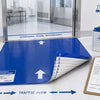
ESD Floor Mats help define and control static-safe floor zones. They are especially useful where personnel stand, carts move, or sensitive devices are staged near benches. A floor mat can reduce static accumulation from footwear and movement, but it must be matched to flooring, grounding method, cleaning practice, and traffic level.
Floor-zone design should account for actual movement. If staff remove items from antistatic bags at a bench but then carry them across standard flooring to an instrument, the protected path may be broken. A floor mat should cover the standing zone and any required movement path where sensitive items are exposed. If carts are involved, wheel contact and grounding strategy should be reviewed.
Mat Selection and Grounding
An ESD floor mat should provide appropriate resistance characteristics and remain stable under traffic. The mat should lie flat, resist curling, tolerate cleaning, and maintain consistent contact with the floor or grounding point. Thick comfort mats may improve ergonomics but must still meet ESD requirements if used in a protected zone. A soft mat that insulates rather than dissipates charge can undermine the program.
The procurement file should define mat size, surface resistance range, grounding method, cleaning compatibility, edge profile, slip resistance, chemical exposure tolerance, and expected traffic. The installation file should identify the mat location, ground point, inspection interval, and acceptance criteria.
Humidity and Environmental Factors
Static risk often increases when humidity is low because dry air allows charge to accumulate more readily. Laboratories should monitor environmental conditions where static-sensitive work occurs. Humidity control is not a replacement for ESD-safe materials, but it supports the program by reducing charge generation and improving consistency.
A lab should define environmental trigger points when additional controls are required. For example, during dry seasons, staff may increase verification frequency, restrict unpacking to protected areas, or use additional grounded surfaces. The procedure should be practical and based on actual facility conditions.
Materials, Cleanability, and Chemical Compatibility
ESD-control products use material systems that combine electrical performance with physical durability. Bags may use metallized film, dissipative polyethylene, shielding layers, or antistatic additives. Containers may use carbon-loaded polymers, dissipative polypropylene, conductive compounds, or surface-treated plastics. Mats may use rubber, vinyl, or engineered dissipative polymer layers.
Material selection should consider more than electrical resistance. Laboratory environments expose ESD products to alcohol wipes, disinfectants, detergents, powders, oils, solvents, UV light, abrasion, and repeated handling. A material that performs electrically when new may degrade if cleaned with incompatible chemicals or scratched through a dissipative surface layer.
Cleanability and Residue Control
Static-safe materials should be cleanable without leaving insulating residue. Some cleaners, floor finishes, waxes, or polishes can create a surface film that alters resistance or charge dissipation. This is especially important for ESD floor mats and containers used in controlled laboratory zones. Cleaning procedures should be approved by both safety and quality stakeholders.
Surface contamination can also affect sensitive workflows. Powders, salts, buffer residues, glove powder, packaging fibers, and adhesive residues may alter surface resistance or contaminate devices. The cleaning method should preserve both ESD performance and laboratory cleanliness.
Mechanical Wear and Service Life
ESD products have a service life. Bags can crease, puncture, delaminate, or lose closure integrity. Containers can crack, warp, or accumulate residues. Floor mats can wear at standing zones, curl at edges, or lose grounding contact. These conditions should trigger inspection and replacement rather than continued use based on appearance alone.
A lifecycle program should define retirement criteria. For bags, reject punctures, tears, seal failure, heavy creasing, or unknown history. For containers, reject cracks, contamination, missing lids, or failed resistance checks. For mats, reject curling, excessive wear, failed ground verification, or surfaces that cannot be cleaned without residue.
ESD Workflow Control Table
A static-control workflow should connect risk level, material selection, verification method, and documentation. The table below provides a practical structure for laboratory managers building an ESD program across storage, transport, and floor-zone control.
| Control Area | Primary Static Risk | Required Control | Verification Method | Procurement Requirement |
|---|---|---|---|---|
| Receiving and quarantine | Unknown packaging history, external charge exposure, uncontrolled unpacking | Keep sensitive items in approved ESD packaging until inspection inside a controlled area | Visual packaging inspection, label check, receiving log review | Require ESD packaging identification, lot or part traceability, and damage-rejection criteria |
| Storage | Static buildup in bins, charge-generating plastic contact, part abrasion | Use ESD-safe storage containers, dividers, lids, and controlled shelf locations | Surface resistance check where required, container inspection, position-map review | Specify container material, resistance range, lid fit, cleanability, and label area |
| Transport | Charge generation from carts, standard totes, foam, film, or floor movement | Use antistatic bags or ESD-safe containers during movement between zones | Transport route audit, container condition inspection, packaging status check | Approve bag type, closure method, container size, and cart or floor-zone requirements |
| Protected floor zone | Charge accumulation from footwear, movement, and exposed handling | Install grounded ESD floor mats or verified dissipative flooring where exposed handling occurs | Ground continuity check, resistance test, mat condition inspection | Specify mat size, resistance properties, grounding hardware, slip resistance, and cleaning method |
| Use and staging | Opening packages outside the protected area, contact with insulative surfaces | Open and stage sensitive items only on approved surfaces inside the ESD protected area | Operator observation, work-surface verification, training review | Define approved bags, containers, mats, labels, signage, and substitution rules |
FAQs
- Why should laboratories treat ESD as a workflow program instead of a packaging issue? Static-sensitive items can be exposed during receiving, storage, transport, staging, and use. Antistatic packaging helps, but it cannot protect an item after it is opened on an uncontrolled surface or moved across an unprotected floor zone. A workflow program controls every transfer point.
- What is the difference between antistatic and static shielding? Antistatic materials reduce charge generation, while static-shielding materials help protect contents from external electrostatic fields. Some workflows require one or both properties. The correct choice depends on item sensitivity, transport risk, and whether the item will be opened inside a protected area.
- How do ESD floor mats protect sensitive items? ESD floor mats help dissipate charge from personnel or movement when properly grounded and maintained. They are most effective when placed where sensitive items are exposed, handled, staged, or transported through a defined protected area.
- Why does surface resistance matter? Surface resistance indicates how readily charge moves across a material. If resistance is too high, charge may remain trapped. If it is too low, discharge may occur too quickly for some sensitive devices. A controlled program selects materials with appropriate resistance behavior for the task.
- Can ordinary plastic bins be used for static-sensitive components? Ordinary plastic bins can generate and hold charge, making them unsuitable for many static-sensitive items. ESD-safe storage containers should be used when devices, sensors, diagnostic components, or electronics-adjacent materials require controlled storage and transport.
- How often should ESD control products be inspected? Inspection frequency should be risk-based. High-use floor mats, shared storage containers, and critical handling stations should be inspected more frequently than low-risk storage locations. Inspection should also occur after cleaning changes, relocation, damage, or unexplained device failures.
- Which LabCals categories support a controlled static-safe workflow? A complete static-safe workflow should connect ESD & Static Control, ESD Antistatic Bags, ESD Floor Mats, and ESD Storage Containers into one documented storage, transport, and protected-area program.
Inventory and Protocol Audit
A practical audit begins with three actions. First, identify all static-sensitive items and map their movement from receiving to storage, transport, staging, use, return, and disposal. Second, verify that each transfer point uses approved packaging, ESD-safe storage containers, grounded floor mats, controlled surfaces, and documented handling rules. Third, lock approved ESD & Static Control products into the purchasing file so substitutions trigger review for resistance properties, grounding compatibility, cleanability, and transport suitability. This gives lab managers a defensible path to reduce static-related failures, protect sensitive samples and devices, and align laboratory handling workflows with current standards for controlled ESD operations.
-
Posted in
Furniture & Facility