Cold-Chain Bench Efficiency: Standardizing Ice Buckets, Tool Trays, Lab Jacks, and Utility Carts for Time-Sensitive Sample Handling
Time-sensitive sample handling fails most often during the quiet moments between controlled storage, preparation, transfer, and analysis. Modern laboratories must manage dwell time, cold-chain exposure, bench staging, tool segregation, and chain-of-custody documentation with the same discipline used for instruments and reagents. A sample can remain technically “on ice” while still warming unevenly, waiting too long at the bench, or moving through an uncontrolled layout that increases handling variation. Standardizing ice buckets, trays, utility carts, lab jacks, and hand tools gives lab managers a practical framework for reducing sample warming, workflow delays, and preventable handling errors.
Cold-Chain Risk at the Bench
Cold-chain control is often discussed as a storage or transport issue, but many losses occur on the working bench. A sample may leave a refrigerator, freezer, cold room, or shipping container under documented conditions, then sit in a poorly staged ice bucket, an overcrowded tray, or a cart with no defined workflow sequence. The result is unmeasured dwell time, uneven sample warming, tool confusion, and avoidable rework.
Lab Tools & Accessories should therefore be managed as process-control assets, not only convenience items. Ice buckets, tool trays, lab jacks, carts, forceps, pestles, crucibles, and hand tools influence how quickly samples move, how consistently operators work, and how clearly a lab can defend its handling procedure. In high-throughput environments, these physical tools shape the real workflow more than the written SOP suggests.
The goal is not simply to keep samples cold. The goal is to control the interval between removal from storage and completion of the next critical step. That interval may include thawing, aliquoting, centrifuge staging, reagent addition, grinding, transfer, mixing, or loading into an analyzer. Each action creates an opportunity for temperature drift, labeling error, contamination, or sample mix-up.
Dwell Time Is a Hidden Quality Variable
Dwell time is the elapsed time a sample spends outside its intended controlled condition. It includes the obvious time on the bench and the less obvious time spent waiting on a cart, sitting in a tray, moving between rooms, or waiting for tools to be cleaned. A sample can be physically near ice but still experience meaningful warming if the container is poorly designed, the tube has limited contact with the cooling medium, or the operator repeatedly opens and closes the staging area.
Professional labs should define maximum dwell time by sample class. Temperature-sensitive proteins, enzymes, nucleic acids, clinical-adjacent specimens, volatile materials, and biological aliquots should not share the same assumptions as stable reagents or general teaching samples. The more sensitive the material, the stronger the need for staged tools, labeled trays, controlled cart routes, and documented handoff points.
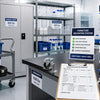
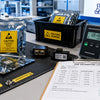
 A clean cold-chain bench setup showing ice buckets, labeled sample trays, forceps, hand tools, a temperature log, and a workflow checklist for time-sensitive sample handling.
 Process Control, OSHA Principles, and Audit Readiness
ISO 15189-style laboratory process control emphasizes defined procedures, traceability, equipment suitability, competence, and control of pre-examination variables. Even when a facility is not formally accredited under ISO 15189, the same thinking is useful: identify the variables that can affect sample quality before analysis, control them with documented procedures, and retain evidence that the workflow was performed as intended.
Cold-chain bench work also intersects with OSHA material-handling principles. Heavy ice buckets, crowded carts, wet floors, awkward lifting, chemical exposure, and unstable bench elevations create safety risks that can also become quality risks. A spill, dropped tray, or unstable transfer may harm staff and compromise sample identity. Good workflow design reduces both injury risk and sample-handling variation.
Chain-of-Custody at the Bench
Chain-of-custody is not limited to forensic or regulated testing. Any laboratory handling high-value or time-sensitive samples benefits from a clear record of who moved the sample, when it moved, where it was staged, and what condition it was held under. Tool trays, carts, and ice buckets can support this record when they are labeled by batch, method, temperature range, or processing status.
A practical system uses visible status labels: received, equilibrating, on ice, in process, hold, completed, rejected, or transferred. Each tray or cart should have a defined purpose. Mixing clean tools, used tools, unprocessed samples, and completed samples in the same staging zone invites error. Segregation turns bench organization into a quality-control measure.
Workflow Validation for Physical Handling
Labs often validate instruments and analytical methods but overlook the physical handling path. A cold-chain workflow validation should test whether the bench layout supports the required time and temperature limits under realistic conditions. This includes peak workload, normal staffing, full sample volume, actual tube racks, actual carts, and the tools operators will use every day.
The output should be simple: maximum number of samples per batch, required ice volume or cooling media, cart route, tray labeling rule, tool segregation rule, dwell-time limit, and corrective action when a limit is exceeded. The most useful SOPs convert these variables into clear setup diagrams and inspection checklists.
Ice Buckets, Trays, and Thermal Staging
Ice Buckets and Trays are the foundation of short-hold cold-chain handling. Their performance depends on insulation, capacity, lid design, chemical compatibility, cleanability, stability, and the way samples contact the cooling medium. A bucket that holds a large ice volume may not provide consistent thermal contact if tubes sit above the ice line or float unpredictably. A compact tray may improve organization but require more frequent replenishment.
Thermal staging should define the cooling medium, preconditioning time, sample position, maximum load, and replenishment interval. Crushed ice, wet ice, dry block inserts, phase-change packs, and chilled racks behave differently. Wet ice offers strong contact but can introduce water contamination if tubes are not sealed or if labels are not moisture-resistant. Chilled racks improve organization but may warm quickly if overloaded or left uncovered.
Cold-Pack Positioning and Tube Contact
Sample tubes do not cool uniformly unless their surfaces maintain consistent contact with the cooling environment. Conical tubes, microcentrifuge tubes, cryovials, and reagent bottles all have different contact geometry. A narrow tube may sit deep in ice, while a wide tube may rest on top. A rack insert may improve vertical orientation but reduce direct thermal contact. The lab should decide whether organization, cooling rate, contamination control, or sample visibility is the primary requirement.
A validated setup may use a layered approach: insulated bucket, controlled amount of ice or cold packs, labeled tube rack, temperature indicator, and time log. This prevents operators from improvising each batch. It also helps supervisors compare performance across shifts and departments.
Moisture Control and Label Integrity
Cold-chain workflows create condensation and wet surfaces. Water can loosen labels, blur writing, hide tube markings, or transfer contamination between containers. Trays and buckets should support drainage, wipe-down, and label visibility. Labels used near ice should resist water and low-temperature handling, and tray positions should be mapped so that a tube remains identifiable even if the label becomes partially compromised.
When the sample identity is critical, do not rely only on individual tube labels. Use secondary controls such as rack maps, tray IDs, batch sheets, barcode scans, and position diagrams. A tray layout that preserves identity under wet conditions reduces the risk of a single label failure becoming a sample failure.
Tool Segregation and Bench Layout
Lab Tool Storage & Trays reduce handling variability by defining where tools, samples, consumables, and completed work belong. A tray is not only a container; it is a control surface. Color coding, etched labels, divided compartments, and method-specific layouts help operators avoid searching for tools or mixing clean and used items.
Forceps & Tweezers and Lab Hand Tools should be assigned by sample type, cleanliness requirement, and chemical exposure. Shared tools increase the risk of carryover when operators move quickly. Dedicated tools, clean/dirty segregation, and defined decontamination intervals reduce contamination risk and preserve workflow speed.
Clean, In-Use, and Used Tool Zones
A practical bench layout separates tools into three states: clean, in-use, and used. Clean tools remain protected from splash, ice water, and sample contact. In-use tools remain within the active processing zone. Used tools move immediately to a defined decontamination tray. This simple separation prevents a common failure mode: a tool touches one sample or reagent and then returns to the clean zone without inspection.
For high-throughput labs, the tray design should match the order of operations. If forceps are needed before sample opening, place them before the tube rack in the workflow path. If a probe or spatula is used after cooling, stage it near the cold tray but outside wet surfaces. Physical sequence should reinforce the SOP.
Mortar, Pestle, Crucible, and Heat-Resistant Accessory Control
Mortar & Pestles and Porcelain Crucibles & Lids are often used outside typical cold-chain discussion, but they matter when workflows include grinding, drying, ashing, heating, cooling, or transfer between thermal states. Porcelain offers strong heat resistance and chemical durability for many workflows, but it can chip, retain residue in surface defects, or experience thermal shock if moved too quickly between temperature extremes.
When a cold-chain workflow connects to grinding or thermal treatment, the lab should define whether tools are pre-chilled, room-temperature, heat-cleaned, or segregated by sample class. A cold sample transferred into a warm mortar may experience rapid localized warming. A clean but damp tool may dilute or contaminate a small sample. The physical condition of the tool can affect both sample integrity and traceability.
Lab Jacks, Utility Carts, and Movement Control
Lab Jacks help position samples, small instruments, containers, and transfer points at controlled working heights. Height control matters because awkward positioning slows operators and increases the chance of spills, dropped tubes, and inconsistent handling time. A lab jack can align a receiving vessel, cold block, balance pan, or transfer station so the operator moves smoothly and consistently.
Lab Utility Carts extend cold-chain control beyond a single bench. A cart can serve as a mobile staging platform for sample transport, batch organization, ice buckets, tool trays, waste containers, and documentation. However, an uncontrolled cart can also become a moving clutter zone. A validated cart should have defined shelves, weight limits, route rules, cleaning procedures, and sample-status labels.
Cart Staging and Route Control
The best utility cart layout mirrors the workflow. Top shelf: active samples and current documentation. Middle shelf: tools, ice buckets, and clean consumables. Bottom shelf: waste, secondary containment, or non-critical supplies. This reduces reaching, bending, and cross-contamination. If the cart crosses corridors or shared spaces, secondary containment and secure sample racks become more important.
Cart routes should minimize travel time and environmental exposure. A direct route between cold storage and the processing bench reduces dwell time. If elevators, doors, or shared corridors add delay, the SOP should define maximum transit time and corrective action when the route is interrupted. For critical samples, use time stamps at removal, arrival, processing start, and processing completion.
Bench Height and Transfer Precision
Height mismatch creates subtle workflow variation. If a sample rack is below elbow level, the operator may tilt tubes inconsistently. If a container sits too high, the operator may transfer liquid at an unstable angle. Lab jacks help standardize the transfer geometry, especially when paired with pipettes, balances, small instruments, or receiving vessels.
For repetitive operations, height standardization improves both safety and reproducibility. The lab should document the preferred setup height or equipment position when it affects transfer accuracy, sample warming, or operator speed. This is especially relevant for short-hold samples where every extra handling step increases dwell time.
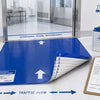
 A staged lab utility cart with an ice bucket, labeled sample trays, tool storage compartments, a lab jack, chain-of-custody worksheet, and visible cold-chain workflow labels for batch movement control.
 Materials, Cleanability, and Chemical Resistance
Material selection determines whether cold-chain tools remain clean, durable, and chemically compatible over repeated use. Polypropylene trays offer strong resistance to many aqueous solutions and routine cleaning agents, but solvent exposure and repeated stress can affect long-term performance. Polycarbonate provides impact strength and clarity but can be vulnerable to some solvents and harsh cleaners. Stainless steel tools provide mechanical precision and durability, but chloride-rich environments, aggressive disinfectants, or poor drying can promote corrosion.
Insulated ice buckets may use foam, polyurethane, polyethylene, or other polymer systems. The key procurement questions are thermal retention, chemical resistance, lid fit, cleanability, drain behavior, and resistance to cracking. A bucket that insulates well but cannot be cleaned effectively may not be suitable for biological, clinical-adjacent, or multi-user workflows.
Cold Exposure and Polymer Performance
Cold temperatures can change polymer behavior. Some plastics become more brittle under chilled conditions, especially when combined with impact, repeated washing, or chemical exposure. Hinges, handles, corners, and snap-fit lids often fail before the main body. Procurement should consider not only the new-product appearance but also lifecycle durability under the actual cleaning and cold-use conditions.
For trays and carts, surface finish also matters. Smooth, nonporous surfaces reduce residue retention and simplify wipe-down. Deep seams, textured wells, damaged corners, and cracked compartments can trap moisture or sample residue. Once a tool becomes difficult to clean, it becomes difficult to defend in an audit.
Metal Tool Selection and Corrosion Control
Forceps, tweezers, spatulas, probes, and small hand tools should be selected by metallurgy, tip geometry, cleaning method, and sample risk. Stainless steels differ in corrosion resistance and hardness. Fine tips improve precision but bend more easily. Serrated tips improve grip but can trap residue. Smooth tips clean more easily but may not hold wet tubes, tissue, or small sample carriers as securely.
A controlled tool program should define cleaning agents, drying requirements, inspection points, and retirement criteria. Discoloration, pitting, bent tips, loose joints, and residue retention should trigger removal from service. Tools used in cold-chain workflows should be easy to clean quickly without compromising sample handling speed.
Workflow Control Table
A cold-chain bench program should connect physical tools to measurable process controls. The table below summarizes common tool categories, workflow risk points, and procurement requirements for professional laboratories.
| Tool Category | Workflow Function | Primary Risk if Uncontrolled | Validation or Control Method | Procurement Requirement |
|---|---|---|---|---|
| Ice buckets and trays | Short-hold cooling, sample staging, batch temperature control | Sample warming, wet labels, uneven cooling, uncontrolled dwell time | Temperature hold test, ice replenishment rule, maximum load definition | Specify insulation, lid design, capacity, drain behavior, cleanability, and chemical compatibility |
| Tool storage trays | Clean/used tool segregation, method-specific setup, batch organization | Cross-contamination, tool searching, workflow delay, sample mix-up | Tray map, color coding, clean/in-use/used zones, operator checklist | Specify compartments, labels, material, cleanability, and compatibility with disinfectants |
| Forceps and hand tools | Tube handling, sample transfer, specimen manipulation, accessory positioning | Carryover, damaged samples, dropped tubes, inconsistent grip | Tool assignment by method, inspection schedule, cleaning record | Specify stainless grade, tip geometry, grip design, chemical resistance, and retirement criteria |
| Lab jacks | Height control, stable transfer geometry, instrument alignment | Spills, slow handling, unstable transfers, operator strain | Setup height standard, load check, stability inspection | Specify platform size, load capacity, height range, surface material, and locking stability |
| Lab utility carts | Sample transport, mobile staging, batch movement, chain-of-custody support | Transit delay, sample tipping, clutter, lost documentation, unsafe load handling | Cart route validation, shelf assignment, load limit, cleaning schedule | Specify shelf layout, wheel type, brakes, secondary containment, handle design, and cleanable surfaces |
| Mortars, pestles, crucibles, and lids | Grinding, thermal transfer, preparation before or after cold handling | Residue carryover, thermal shock, localized warming, chipped surfaces | Preconditioning rule, inspection checklist, method-specific cleaning | Specify material, thermal tolerance, chemical resistance, surface quality, and replacement criteria |
FAQs
- Why is cold-chain bench organization important if samples are already on ice? Ice alone does not control the full workflow. Sample position, contact with the cooling medium, dwell time, label durability, tray organization, and operator sequence all affect sample integrity. A controlled bench setup reduces warming, delays, and sample mix-ups.
- How should a lab define dwell time for time-sensitive samples? Dwell time should start when the sample leaves its defined storage condition and end when the next controlled step is completed. Labs should define maximum dwell time by sample class and document corrective action when the limit is exceeded.
- What is the advantage of labeled tool trays? Labeled trays reduce operator searching, separate clean and used tools, support batch identity, and help supervisors audit workflow setup quickly. They also make training easier because the physical layout reinforces the SOP.
- When should a lab use a utility cart instead of hand-carrying samples? Use a utility cart when samples, tools, ice buckets, documentation, or secondary containment exceed what an operator can safely and consistently carry. A cart is especially useful when it has defined shelf assignments, secure racks, route controls, and cleaning procedures.
- How do lab jacks improve sample-handling consistency? Lab jacks standardize working height and transfer geometry. This reduces awkward motion, spills, and inconsistent handling speed. They are useful when small changes in position affect transfer accuracy, sample warming, or operator safety.
- Which materials are best for cold-chain trays and tools? The best material depends on exposure. Polypropylene works well for many aqueous workflows, stainless steel supports durable precision tools, and porcelain supports heat-resistant preparation. Chemical resistance, low-temperature durability, cleanability, and inspection requirements should drive selection.
- Which LabCals categories support a controlled cold-chain bench setup? A complete setup should connect Ice Buckets and Trays, Lab Tool Storage & Trays, Lab Utility Carts, Lab Jacks, Forceps & Tweezers, and method-specific Lab Hand Tools.
Inventory and Protocol Audit
A practical audit begins with three actions. First, map each time-sensitive workflow from storage removal to completion of the next controlled step, then identify every bench tool, tray, bucket, cart, and height-control device used along the path. Second, assign limits for dwell time, sample load, ice or cold-pack condition, tool segregation, cart route, and chain-of-custody documentation. Third, lock approved Lab Tools & Accessories into the purchasing file so substitutions trigger review before use. This gives lab managers a defensible path to reduce sample warming, improve workflow consistency, protect chain-of-custody records, and align physical bench operations with current standards for controlled laboratory handling.
-
Posted in
Lab Equipment & Microscopy