Swab Selection Guide: Choosing Between Foam, Polyester, and Sterile Cotton for Accurate Sampling
In the precision-driven landscape of 2026, the integrity of a diagnostic or forensic result is inextricably linked to the physical and chemical properties of the collection media. As liquid chromatography-mass spectrometry (LC-MS) and high-sensitivity genomic sequencing become standard in modern facilities, the presence of trace background contaminants or poor recovery rates from substandard applicators can compromise entire datasets. Adhering to updated ISO 18385 and ASTM standards is no longer optional for laboratories seeking to maintain clinical and forensic accreditation in an increasingly scrutinized environment.
Material Science: Foam, Polyester, and Cotton Compared
The selection of a swab head material is a critical decision based on the solvent compatibility, particle generation limits, and the required recovery rate of the analyte. In 2026, the use of medical-grade 100-PPI (pores per inch) reticulated foam has seen a resurgence due to its high solvent-holding capacity and effective particle entrapment. Unlike traditional cotton, which contains natural fatty acids and lignins that can interfere with PCR or spectrometry, synthetic materials like polyester and thermally bonded foam offer a low-background alternative necessary for cleanroom and high-purity applications.
Polyester swabs, particularly those constructed with an alpha-knitted structure, provide excellent abrasion resistance and low non-volatile residue (NVR). These characteristics are essential when sampling from rough surfaces where mechanical integrity is paramount to prevent fiber shedding. When evaluating material breakthrough times in the presence of aggressive solvents like IPA or MEK, synthetic variants consistently outperform natural fibers, maintaining their structural bond and preventing "tip-loss" that can contaminate a sensitive sample environment.
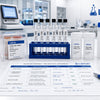
 Comparative microstructure analysis of collection tips, highlighting the fiber density and pore structure of modern sampling media.
Forensic Integrity and Sterile Swabs
For applications in DNA collection, toxicology, and microbiology, the use of Sterile Swabs is a fundamental requirement to prevent cross-contamination and sample degradation. In 2026, "forensic-grade" sterility goes beyond simple autoclaving; it involves Gamma Irradiation or Ethylene Oxide (EtO) processing to achieve a Sterility Assurance Level (SAL) of 10^-6. These Sterile Swabs are typically packaged in tamper-evident breathable pouches that allow for post-sterilization outgassing while maintaining a biological barrier.
The choice of shaft material—ranging from flexible polystyrene to breakable wood—is also a significant factor in Sterile Swabs selection. In forensic settings, "flocked" swabs have become the 2026 benchmark. By utilizing perpendicular nylon fibers that create a capillary effect, flocked Sterile Swabs absorb significantly more liquid and, more importantly, release over 90% of the collected specimen into the transport medium, compared to only 20-30% for standard wound cotton applicators.
Industrial Precision with Foam Applicators
Industrial cleaning and validation sampling require a different set of physical characteristics, primarily chemical resistance and non-abrasive contact. Foam Applicators are specifically engineered for these high-precision tasks. The reticulated structure of the foam allows for the scrubbing of microscopic contaminants without scratching delicate optical surfaces or high-vacuum components. In 2026, technical labs utilize Foam Applicators that are thermally bonded to their handles, eliminating the use of adhesives that could leach and invalidate TOC (Total Organic Carbon) validation tests.
When performing "swab-sampling" for cleaning validation in pharmaceutical manufacturing, Foam Applicators must show a high recovery rate for active pharmaceutical ingredients (APIs). The pore size must be large enough to capture residues but tight enough to prevent the entrapment of the very analytes that need to be tested. This balance of physical entrapment and release is what makes Foam Applicators the preferred tool for ISO Class 4 and 5 cleanroom environments where molecular purity is a strictly monitored metric.
Streamlining Workflows with Sampling Kits
To ensure reproducibility and reduce the risk of human error in the field, laboratories are increasingly adopting integrated Sampling Kits. These kits provide a standardized set of components—including specialized swabs, transport media, and secondary containment—required for a specific protocol. In 2026, Sampling Kits are designed to meet IATA and DOT regulations for the transport of biological substances, ensuring that samples remain viable and stable during transit to the analytical facility.
The technical advantage of Sampling Kits lies in the "system-validation." Manufacturers test the compatibility of the swab material with the included stabilization buffer to ensure no interference with downstream assays such as qPCR or CRISPR-based detection. By utilizing Sampling Kits, procurement officers can verify that all components share the same lot number, facilitating easier traceability and compliance with 2026 ISO 17025 accreditation requirements for sample chain-of-custody.
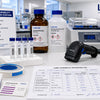
 Integrated Sampling Kits designed for 2026 field-to-lab logistics, featuring validated transport media and sterile collection tools.
2026 Material Performance Matrix
The following table summarizes the performance ratings of modern swab materials based on 2026 laboratory benchmarks for absorption, release, and purity.
| Swab Material Type | Sample Recovery (%) | Cleanroom Class | Primary Application | Regulatory Standard |
|---|---|---|---|---|
| Knitted Polyester | 85-95% | ISO 3-5 | Cleanroom Validation | ASTM D5127 |
| Reticulated Foam | 70-85% | ISO 4-7 | Industrial Cleaning | ANSI/ESD S20.20 |
| Flocked Nylon | 90-98% | Forensic Grade | DNA / Viral Collection | ISO 18385 |
| Medical Cotton | 20-35% | Standard Lab | General Prep | USP Class VI |
Frequently Asked Questions
- Question: Why can't I use standard cotton swabs for DNA collection? Standard cotton contains natural inhibitors and exhibits low release rates. For genomic applications, Sterile Swabs with flocked tips are preferred as they ensure high recovery and prevent the introduction of foreign DNA or fatty acids.
- Question: Are Foam Applicators resistant to acetone? Not all. While high-density Foam Applicators are resistant to many alcohols, acetone can cause certain urethane foams to swell or degrade. Always verify the foam type (polyether vs. polyester) against your specific solvent.
- Question: Do Sampling Kits include transport media? Most professional-grade Sampling Kits include a validated transport medium such as VTM or saline, specifically chosen to maintain the stability of the analyte during the shipping window.
- Question: What does "thermally bonded" mean in swab construction? Thermal bonding uses heat to fuse the swab head to the handle, as opposed to using glues. This is critical for Foam Applicators used in sensitive electronics or chemical analysis to prevent adhesive leaching.
- Question: How should I store Sterile Swabs to maintain their shelf life? Sterile Swabs should be kept in a cool, dry environment away from direct UV light to prevent the degradation of the sterile barrier and the shaft material.
Optimizing your sampling protocols for 2026 requires a meticulous audit of your current applicator inventory against modern sensitivity requirements. Lab managers should transition away from high-background natural fibers in favor of high-recovery Sterile Swabs for biological work and low-residue Foam Applicators for industrial tasks. By standardizing on validated Sampling Kits, institutions can ensure both regulatory compliance and the highest degree of analytical accuracy. Evaluate your current breakthrough times and recovery metrics this year to identify where upgrading your sampling media can yield the most significant improvements in data quality.
-
Posted in
Life Sciences & Clinical