Cleanroom Validation: Detecting Micro-Contaminants with Precision Swabbing Protocols
In the high-stakes environments of pharmaceutical manufacturing and semiconductor fabrication, the margin for error regarding surface contamination is effectively zero. Cleanroom validation protocols have evolved from simple visual inspections to rigorous, molecular-level assessments designed to detect non-volatile residues and total organic carbon. Maintaining the integrity of these environments requires a clinical understanding of how sampling tools interact with surfaces and solvents to ensure that validation data reflects actual conditions rather than equipment-induced artifacts.
Regulatory Framework: ISO 14644-1 and USP Compliance
Modern cleanroom operations are governed by ISO 14644-1, which classifies environments based on airborne particulate concentrations. However, surface cleanliness validation is an equally critical component of a comprehensive contamination control strategy. In pharmaceutical compounding and manufacturing, adherence to USP <797> and USP <800> is mandatory to prevent cross-contamination and ensure the sterility of hazardous and non-hazardous drugs. These standards dictate not only the frequency of testing but the sensitivity required for sampling instruments.
For a Procurement Officer, selecting the correct sampling tools is a matter of regulatory risk management. Using substandard Applicator Swabs that shed particles can lead to "false positive" results during particulate counting, resulting in unnecessary facility shutdowns and costly re-validation cycles. Conversely, high-quality Sterile Swabs manufactured in ISO Class 4 or 5 environments ensure that the sampling device itself does not introduce foreign particulates into the validated zone.
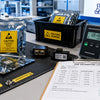
 Precision Sampling: A standardized swabbing protocol being executed within a controlled environment to ensure repeatable TOC recovery rates.
Total Organic Carbon (TOC) Validation and Surface Sampling
Total Organic Carbon (TOC) validation is the industry standard for cleaning validation in pharmaceutical processes. This methodology detects a wide range of organic compounds by oxidizing them to CO2 and measuring the resulting conductivity change. Because TOC analysis is sensitive to parts-per-billion (ppb) levels, the choice of sampling material is paramount. Background organic matter—often referred to as "background noise"—leaching from the swab head or handle can significantly skew results.
To achieve high-sensitivity HPLC or TOC analysis, Lab Managers prioritize Sampling Kits specifically certified for low TOC levels (typically <50 ppb). These kits often include specialized vials and swabs that have undergone rigorous cleaning processes to remove residual manufacturing lubricants or surfactants. Without these specialized tools, the TOC levels detected may reflect the carbon content of the swab’s polyester knit rather than the cleanliness of the stainless steel reactor surface.
Material Science: Knitted Polyester vs. Closed-Cell Foam
The material science of the swab head determines its solvent compatibility and particle generation profile. For cleanroom validation, two primary materials dominate the landscape: Knitted Polyester and Closed-Cell Foam. Knitted polyester swabs are constructed from continuous-filament yarns, making them exceptionally low in particle generation. They are the preferred choice for ISO Class 1 through 5 environments where microscopic fiber shedding is a critical failure mode.
In contrast, Foam Applicators made from 100 PPI (pores per inch) polyurethane foam offer high absorbency and "scrubbing" ability, which is ideal for removing stubborn residues. However, foam can be susceptible to degradation when used with aggressive solvents like Methyl Ethyl Ketone (MEK). For validation involving HPLC analysis, the thermal-bonding of the head to the handle—rather than using adhesives—is essential to prevent adhesive-based extractables from contaminating the sample.
Minimizing "Background Noise" and Extractables
"Background noise" in sampling refers to the baseline levels of NVR (Non-Volatile Residue) or TOC inherent to the sampling tool. High-sensitivity testing requires that this baseline be as close to zero as possible. This is achieved through a "blank" measurement, where a swab is processed identically to a sample but without contacting a surface. If the blank values are high or inconsistent, the statistical validity of the surface test is compromised.
To minimize these extractables, technical procurement should focus on swabs with handles made of high-purity polypropylene, which lacks the plasticizers found in cheaper plastics. Furthermore, the use of Sterile Swabs that have been triple-bagged ensures that the sample remains uncontaminated from the point of manufacture to the moment of use. Standardizing on low-NVR Applicator Swabs allows for more consistent HPLC baselines and reduces the need for repeated sampling.
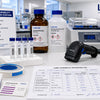
 Material Integrity: Knitted polyester swabs provide the lowest particulate profile and highest TOC recovery percentages for pharmaceutical validation.
Standardizing Precision Swabbing Methodology
Even the highest quality Sampling Kits will yield inaccurate data if the swabbing technique is not standardized. Precision swabbing involves a consistent "side-to-side" and "up-and-down" motion over a defined area (typically 10cm x 10cm). The swab must be rotated during the process to ensure the entire head surface is utilized for contaminant entrapment. Using Foam Applicators with rigid internal paddles can help apply consistent pressure, which is vital for reproducible recovery rates.
Recovery rate studies are essential to validate the swabbing SOP itself. This involves "spiking" a surface with a known quantity of a contaminant and measuring how much is recovered by the swab. A recovery rate of >80% is generally targeted. If recovery is low, it may indicate that the solvent is not effectively solubilizing the residue or that the swab material is retaining the analyte rather than releasing it into the diluent for analysis.
| Head Material | Particle Generation | Absorbency (Solvent) | Chemical Resistance | Best Use Case |
|---|---|---|---|---|
| Knitted Polyester | Ultra-Low | Moderate | Excellent (IPA, Acetone) | TOC/HPLC Validation |
| Closed-Cell Foam | Low | High | Moderate (IPA Only) | General Surface Cleaning |
| Microfiber | Low | Ultra-High | Good | Removal of oily films |
| Medical-Grade Cotton | High | High | Good | Non-Cleanroom Sampling |
Technical Frequently Asked Questions
- How do extractables differ from NVR? Non-Volatile Residue (NVR) refers to the soluble material remaining after solvent evaporation. Extractables are the specific chemical species (like silicone or plasticizers) that leach from the swab into the solvent. Both contribute to "background noise."
- Why is a polypropylene handle preferred over wood or polystyrene? Wood handles can shed fibers and organic compounds, while polystyrene can be brittle and react with certain solvents. Polypropylene is chemically inert and offers the high purity required for Sterile Swabs used in validation.
- Can I reuse swabs for multiple sampling points? No. To prevent cross-contamination and ensure data integrity, each 10cm x 10cm area must be sampled with a fresh Applicator Swabs.
- Are all sterile swabs suitable for TOC validation? Not necessarily. Sterility refers to the absence of living microorganisms, whereas TOC validation requires the absence of organic carbon. Ensure your Sampling Kits are specifically certified for low TOC.
Ensuring the integrity of a cleanroom validation protocol is a continuous process of auditing both methodology and materials. For the upcoming quarter, Lab Managers should perform a 3-step audit: first, review blank values from recent TOC analyses to identify if sampling tools are contributing to background noise; second, verify that all Foam Applicators and swabs are compatible with the specific solvents currently in use; and third, standardize the swabbing surface area across all SOPs to ensure data comparability. By prioritizing high-purity sampling instruments, facilities can ensure that their validation data is both accurate and audit-ready.
-
Posted in
Life Sciences & Clinical