The Chemistry of Clean: Neutralizing Specialized Residues with Targeted Surfactants and Wipers
In the precision-driven landscape of 2026, the definition of "clean" has migrated from the absence of visible debris to the absolute neutralization of molecular-level contaminants. As genomic sequencing and micro-assembly reach unprecedented sensitivities, residues such as silicone oils, RNA/DNA-se, and stubborn Adhesives represent significant risks to experimental integrity and product yield. Achieving institutional compliance now requires a data-centric approach to surfactant selection and substrate compatibility, ensuring that specialized contaminants are not merely displaced, but chemically neutralized and physically removed.
Molecular Neutralization of RNA/DNA-se
For molecular biology laboratories, the presence of nucleases—specifically RNase and DNase—can render high-value assays worthless. These enzymes are notoriously resilient, often surviving standard autoclaving and generic Isopropyl Alcohol (IPA) treatments. Effective decontamination in 2026 relies on Disinfectants & Surface Cleaning agents formulated with oxidizing agents or protein-denaturing surfactants. These chemistry-driven solutions work by disrupting the hydrogen bonds and disulfide bridges within the enzyme's secondary and tertiary structures, permanently inactivating the catalytic site.
The application method is as critical as the chemistry itself. Utilizing Lab Wipes & Cleanroom Wipers saturated with these neutralizing agents ensures a controlled mechanical action that lifts the denatured proteins from the surface. In BSL-2 and BSL-3 environments, these contaminated wipers must be immediately sequestered in Biohazard & Storage Bags to prevent aerosolization of residue. Furthermore, technicians should utilize Finger Cots or high-integrity gloves during the cleaning process to prevent the re-introduction of skin-derived nucleases back onto sterilized work surfaces.
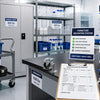
 Precision application of protein-denaturing agents to a stainless steel workbench, illustrating the transition from general sanitation to molecular neutralization in 2026-grade facilities.
Surfactant Mechanics: Emulsifying Silicone and Oils
Silicone oils and non-polar lubricants present a unique challenge in precision environments, particularly in optics and semiconductor manufacturing. These residues possess exceptionally low surface tension, allowing them to spread into thin, persistent films that interfere with Adhesives and optical pathways. General Hand & Surface Sanitizers are typically ineffective against these contaminants because they lack the necessary micellar structure to encapsulate non-polar molecules.
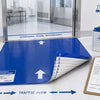
Targeted surfactants utilized in 2026 cleanroom protocols feature a dual-affinity molecular structure: a hydrophilic head and a lipophilic tail. When applied with high-sorbency Lab Wipes & Cleanroom Wipers, these surfactants reduce the interfacial tension between the oil and the substrate. This process, known as emulsification, allows the oil to be suspended in the aqueous cleaning solution and subsequently absorbed into the wiper’s polymer matrix. For high-traffic areas, the use of Cleanroom Sticky Mats at thresholds is vital to prevent the tracking of industrial oils from non-controlled zones into the precision environment.
Substrate Science: Wiper Material Compatibility
The effectiveness of specialized cleaning chemistry is heavily influenced by the wiper substrate. In 2026, the industry has largely pivoted toward continuous-filament polyester and hydroentangled non-wovens for precision tasks. Unlike cellulose, which can shed fibers and introduce organic impurities, 100% polyester Lab Wipes & Cleanroom Wipers offer high chemical resistance and low extractable levels. This ensures that the wiper does not react with aggressive Disinfectants & Surface Cleaning solutions or leach plasticizers onto the cleaned surface.
Material science also dictates sorptive capacity and release rates. For neutralizing Adhesives residues, a wiper with a high "scrubbing" texture—achieved through specialized knitting patterns—allows for mechanical agitation without compromising the cleanroom's particulate count. Technicians handling these substrates in micro-electronics assembly must wear Finger Cots to maintain tactile precision while preventing the transfer of salts and oils that could degrade the specialized surfactants' performance.
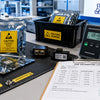
 Scanning electron microscopy (SEM) analysis of 2026-grade polyester wipers compared to traditional blends, demonstrating the superior fiber integrity required for neutralizing aggressive adhesive residues.
Managing Adhesive Residue and Trace Contaminants
Adhesive transfer is a frequent but overlooked source of contamination in labs using temporary labeling or protective films. These Adhesives often leave behind pressure-sensitive polymers that attract dust and microbial load. Removal requires solvents that can penetrate the polymer matrix without damaging the underlying equipment. Standard alcohols often "smear" these residues; instead, 2026 protocols recommend hydrocarbon-based or aqueous-alkaline cleaners found in specialized Disinfectants & Surface Cleaning portfolios.
To prevent cross-contamination during large-scale decontamination, the workflow should integrate Cleanroom Sticky Mats to capture particulates and Biohazard & Storage Bags for the immediate disposal of saturated wipers. This "closed-loop" cleaning methodology ensures that specialized residues are not just moved from one bench to another but are fully extracted from the environment. Effective management of these trace contaminants is now a prerequisite for passing 2026 ISO 14644-13 audits, which focus specifically on the "cleaning of surfaces to achieve defined levels of cleanliness."
2026 Standards for Precision Cleanliness
Institutional compliance has evolved to include rigorous testing for trace residues. The ASTM E1216-11 standard (Standard Practice for Retrival and Enumeration of Particulate Contamination from Surfaces using Tape Lift) and the 2026 ISO 14644-13 guidelines provide the framework for validating cleaning efficacy. Lab managers must now document the "Surface Cleanliness by Chemical Concentration" (SCC), ensuring that residues of Adhesives or silicone oils do not exceed specified nanogram-per-square-centimeter thresholds.
| Contaminant Type | Neutralization Chemistry | Wiper Substrate Recommendation | 2026 Cleanliness Standard |
|---|---|---|---|
| RNA/DNA-se | Oxidizing / Denaturing Agents | Hydroentangled Polyester/Cellulose | ISO 14644-13 (Molecular) |
| Silicone Oils | High-Affinity Micellar Surfactants | Knitted Continuous-Filament Polyester | SCC Level 1-5 (ISO) |
| Adhesive Residue | Hydrocarbon / Alkaline Cleaners | Abrasive-Texture Non-Woven | ASTM E1216-11 |
| Skin Salts/Oils | 70% IPA / Targeted Sanitizers | Microfiber Synthetic | ISO Class 5 Compliance |
Frequently Asked Questions
- Why is IPA ineffective against silicone oil? Isopropyl Alcohol is a polar solvent with limited ability to emulsify non-polar silicone molecules. While it may spread the oil, it cannot lift and encapsulate it, often resulting in a thinner, more widespread film of contamination.
- How do "Sticky Mats" assist in chemical residue control? While Cleanroom Sticky Mats primarily target particulates, they are essential in preventing the mechanical transfer of oil-laden dust from hallways into sterile suites, thereby reducing the chemical burden on the surfactants used inside.
- Are "Finger Cots" necessary if I am already wearing gloves? Finger Cots are often used over gloves to provide an extra layer of protection during high-abrasion cleaning tasks or replaced frequently to prevent the transfer of Adhesives during precision assembly.
- What is the significance of ASTM E1216-11 in 2026? This standard provides the validated methodology for using "tape lifts" to verify that mechanical cleaning with Lab Wipes & Cleanroom Wipers has actually removed particulates and residues rather than just relocating them.
Precision cleaning in the modern lab environment is an exercise in applied chemistry. To prepare for the coming year, lab managers should audit their chemical inventory to ensure they possess targeted neutralizers for their specific contaminants—moving beyond "all-purpose" solutions. Conduct a compatibility review between your Disinfectants & Surface Cleaning agents and your Lab Wipes & Cleanroom Wipers to maximize elution and neutralization. Finally, ensure that threshold controls like Cleanroom Sticky Mats and disposal protocols using Biohazard & Storage Bags are strictly enforced to maintain a zero-residue environment. Would you like me to develop a customized surface validation protocol based on your specific 2026 cleanliness targets?
-
Posted in
Safety & Consumables