Sterile Chain of Custody: Implementing ISO-Compliant Disinfection and Surface Protocols
In the rigorous regulatory climate of 2026, maintaining a sterile chain of custody is no longer a matter of periodic sanitation but a continuous engineering requirement. As ISO 14644-1 standards evolve to address increasingly sensitive biotechnological and semiconductor processes, the selection of chemical agents and mechanical tools must be grounded in molecular efficacy. This guide details the technical parameters for implementing high-integrity disinfection protocols across ISO Class 5 through 8 environments, ensuring both microbial lethality and substrate compatibility.
Cleanroom Classification and Contamination Dynamics
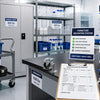
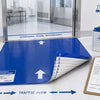
Contamination control in 2026 is predicated on the understanding of particle kinetics. In an ISO Class 5 environment, the maximum allowable concentration is 3,520 particles per cubic meter for particles ≥0.5 µm. Achieving this requires a multi-layered defense strategy that begins at the threshold. The transition from uncontrolled spaces to controlled environments necessitates the use of high-tack Cleanroom Sticky Mats. These mats utilize a poly-ethylene substrate coated with a pressure-sensitive adhesive designed to capture 99% of footborne particulates through 2026-standardized "peel-and-clean" cycles.
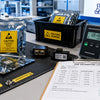
Beyond floor-level control, the human element remains the primary vector for biological shedding. Even with advanced gowning, exposed skin or micro-fissures in gloves can compromise a sterile field. The implementation of Finger Cots provides a secondary barrier for high-dexterity tasks where full glove changes are impractical, though they must meet stringent ASTM D3772 standards for tensile strength and elongation. These specialized barriers prevent the transfer of skin oils and salts which can act as corrosive agents on sensitive laboratory instrumentation.
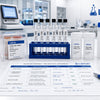
 A technician utilizing precise mechanical cleaning methods to maintain the sterile chain of custody within a Grade A laminar flow hood, highlighting the intersection of chemical application and physical removal.
The Chemistry of Disinfection: Surfactants and Efficacy
The selection of Disinfectants & Surface Cleaning agents is governed by the specific microbial challenges of the facility. In 2026, the focus has shifted toward "cleaner-disinfectants"—formulations that utilize surfactants to lower the surface tension of water, allowing the active biocidal agent to penetrate biofilm matrices. Quaternary ammonium compounds remain a staple for non-porous surfaces due to their broad-spectrum activity, yet for ISO 5 environments, the industry has standardized on sterile-filtered 70% Isopropyl Alcohol (IPA) and stabilized Hydrogen Peroxide (H2O2).
Furthermore, the protocol for Hand & Surface Sanitizers in the anteroom must account for "contact time"—the duration a surface must remain visibly wet to achieve the specified log reduction in microbial load. According to EPA and ISO 22196:2026 guidelines, common pathogens require between 30 seconds and 10 minutes of exposure. Lab managers must ensure that the evaporation rate of the chosen sanitizer does not exceed the required kill time, particularly in high-airflow environments.
Mechanical Intervention: Wipers and Applicators
While chemical action neutralizes pathogens, mechanical action is required to remove them. The architecture of Lab Wipes & Cleanroom Wipers is a critical technical variable. Non-woven polyester-cellulose blends are often preferred for their high absorbency in ISO 7-8 zones, but for ISO 5 and 6 environments, continuous-filament knitted polyester wipers are mandatory. These are often laundered in a cleanroom facility and laser-cut to seal the edges, preventing the shedding of lint or fibers.
For intricate equipment and recessed geometries where standard wipers cannot reach, Applicator Swabs serve as the primary tool for precision cleaning. These applicators, often constructed with thermally bonded heads of laundered polyester or medical-grade foam, allow for the targeted application of Disinfectants & Surface Cleaning agents into grooves, ports, and sensors. The choice of swab must consider "Non-Volatile Residue" (NVR) levels to ensure that the process itself does not leave behind molecular contaminants.
| Cleanroom Class (ISO) | Primary Cleaning Tool | Recommended Chemical Agent | 2026 Compliance Target |
|---|---|---|---|
| ISO 5 (Grade A) | Knitted Polyester Wipers | Sterile 70% IPA / Sporicidal H2O2 | USP <797> / <800> |
| ISO 6 (Grade B) | Presaturated Wipes | Phenolic Compounds | ISO 14644-5 |
| ISO 7 (Grade C) | Non-woven Poly-Cellulose | Quaternary Ammonium | ASTM E2180 |
| ISO 8 (Grade D) | Microfiber Wipers | General Surfactants | OSHA 1910.1030 |
Surface Integrity and Zonal Control
Modern lab surfaces are designed for chemical resistance, but repetitive exposure to harsh oxidizers can lead to microscopic pitting. This pitting creates "micro-refuges" where microbes can sequester and develop resistance. Therefore, the sterile chain of custody requires a rotational disinfection program. By alternating between different classes of Disinfectants & Surface Cleaning agents, lab managers can prevent the selection of resistant strains within the facility.
Integrating Hand & Surface Sanitizers at every zonal transition point ensures that the bio-burden is reduced systematically. In 2026, many facilities have moved toward touchless dispensing systems for Hand & Surface Sanitizers to eliminate cross-contamination at the point of use. This is especially vital when personnel are transitioning between different cleanroom grades, where the "push" of contamination from lower-grade to higher-grade areas must be zeroed out.
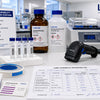
 High-precision cleaning using specialized applicator swabs to ensure zero-residue integrity on critical analytical equipment interfaces.
Audit Readiness and 2026 Compliance Standards
Compliance in 2026 is data-driven. Regulatory bodies now require documented evidence of "cleaning validation." This involves using Applicator Swabs to take surface samples after a cleaning cycle to test for residual proteins. If the chain of custody is broken, the lab must be able to trace the failure back to the specific lot of Lab Wipes & Cleanroom Wipers or the batch of Disinfectants & Surface Cleaning used.
- How do I choose between dry and presaturated Lab Wipes & Cleanroom Wipers? Dry wipers allow for customized chemical loading but introduce the risk of over-saturation. Presaturated wipes provide a consistent "wetness" and reduce VOC emissions, which is critical for ISO 5 air quality standards.
- Why are Cleanroom Sticky Mats necessary if we use shoe covers? Shoe covers can still harbor fine particulates. Sticky mats act as a secondary mechanical trap to ensure that any particles generated during the gowning process do not migrate into the sterile zone.
- Can Hand & Surface Sanitizers replace full gowning protocols? No. Sanitizers are a supplemental control designed to reduce transient microbial flora. They do not address the constant shedding of skin cells that full PPE and Finger Cots are designed to contain.
- What is the significance of the "Non-Woven" label in Lab Wipes & Cleanroom Wipers? Non-woven indicates that the fibers are bonded mechanically or thermally. This usually results in higher absorbency but lower physical durability and higher linting potential compared to knitted polyester.
Effective sterile chain management in 2026 demands a rigorous, technical approach to every consumable item. Lab managers should conduct a quarterly audit of their Lab Wipes & Cleanroom Wipers for particulate compliance, review the log-reduction data for their Disinfectants & Surface Cleaning rotations, and ensure that Hand & Surface Sanitizers are placed strategically. By integrating Cleanroom Sticky Mats, Finger Cots, and Applicator Swabs into a cohesive SOP, facilities can achieve a level of environmental integrity that meets the most demanding ISO standards. Would you like me to draft a specific SOP template for your ISO Class 7 disinfection rotation?
-
Posted in
Safety & Consumables