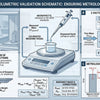
The Metrology of Glassware: Assessing Volumetric Integrity in High-Precision Analytics
Master the metrology of laboratory glassware with this expert guide. We analyze Class A vs. B tolerances, the physics of gravimetric calibration, and the material science of Borosilicate 3.3 to ensure volumetric integrity in high-sensitivity analytical workflows.

Flux Dynamics and Membrane Selection: Optimizing Throughput in Vacuum Filtration Systems
Optimize laboratory throughput with an expert analysis of flux dynamics and membrane material science. This deep-dive explores the technical selection of PES, PTFE, and Nylon for vacuum filtration, ensuring regulatory compliance and maximum workflow efficiency.

The Metrology of Liquid Handling: Mitigating Systematic Error in Volumetric Pipetting
Master the physics of liquid handling with our deep-dive into volumetric pipetting metrology. Learn how to mitigate systematic errors, understand the impact of vapor pressure and altitude, and ensure full ISO 8655 compliance for your laboratory.

The Physics of Mixing: Matching Magnetic Torque to Fluid Dynamics in High-Viscosity Applications
Moving beyond RPM: Discover the science of magnetic torque and digital feedback loops in laboratory mixing. This technical guide explains how to match stirrer performance to fluid rheology for high-viscosity applications.

Beyond the Cycle: Minimizing Edge Effect and Thermal Non-Uniformity in High-Density qPCR Plates
Reduce 384-well qPCR edge effects by engineering heat transfer and evaporation control with ISO-aligned verification, WVTR-framed sealing, and procurement-grade KPIs.

Advanced Analytical Weighing: Navigating USP <41> Compliance and Environmental Stability
Master analytical weighing precision and USP <41> compliance. Explore the impact of air buoyancy, static electricity, and vibration on sub-milligram data integrity, with strategic guidance on instrument selection and ISO 17025 metrological traceability.

Borosilicate 3.3 Excellence: Validating Thermal Shock Resistance for High-Pressure Sterilization
Validate borosilicate 3.3 thermal shock resistance for autoclave use. Understand ASTM E438 Type I standards to reduce glass fatigue, breakage, and failure during high-pressure sterilization cycles.

Cryogenic Sample Integrity: Engineering Seal Reliability for Long-Term Bio-Banking
Cryogenic integrity is a balance of material science and mechanical engineering. Learn why polypropylene grades, internal vs. external threading, and thermal expansion coefficients are the critical factors in preventing sample loss during long-term bio-banking storage.