Eliminating Cross-Contamination: A Step-by-Step Cleanroom Sanitization Protocol
In the ultra-precision landscape of 2026 laboratory operations, the definition of "clean" has shifted from the visible absence of debris to the measurable elimination of sub-micron particulates and molecular residues. As high-throughput genomic sequencing and advanced semiconductor research become standard, even a single stray fiber or unneutralized biological residue can invalidate months of critical data. Maintaining institutional compliance with evolving ISO 14644-1 standards requires a transition from legacy cleaning habits to a specialized, data-driven sanitization protocol rooted in advanced material science.
The Physics of Contamination in 2026
Contamination control in modern facilities is essentially an exercise in particle physics. In a controlled environment, particulates are introduced through three primary vectors: personnel, material transfer, and mechanical wear from high-speed instrumentation. Statistical data from 2025 audits indicate that over 80% of cleanroom breaches originate from improper gowning sequences or inadequate neutralization of transfer surfaces. To combat this, lab managers must implement a multi-stage defense that addresses both viable (living) and non-viable (inanimate) contaminants simultaneously.
The 2026 sanitization framework relies on the principle of "Zonal Isolation." This involves creating distinct barriers where specific 2. Lab Consumables & Cleaning supplies are deployed to prevent the migration of debris. By understanding the electrostatic attraction between airborne particles and work surfaces—often exacerbated by modern HVAC filtration—facilities can utilize specialized consumables to neutralize charges and capture particulates before they settle on critical assays or sensitive optics.
Entrance Protocols: Sticky Mats and Finger Cots
The sanitization protocol begins before a technician enters the primary work zone. The strategic deployment of Cleanroom Sticky Mats & Finger Cots represents the first line of defense against gross contamination. Adhesive mats must be placed at transition points to capture soil and micro-particulates from footwear or cart wheels. In 2026, high-performance mats utilize a multi-layer polyethylene construction with a high-tack adhesive specifically formulated not to transfer onto cleanroom-certified shoes, avoiding the "tracking" effect that can lead to VOC outgassing.
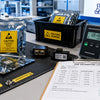
Inside the controlled environment, manual dexterity tasks—especially those involving sensitive electronics or delicate specimen handling—require the use of Cleanroom Sticky Mats & Finger Cots for localized protection. Modern finger cots provide a barrier against skin oils and salts without the thermal burden of full gloves. For 2026 compliance, these must be powder-free, anti-static, and often made from nitrile or specialized latex blends to meet ISO Class 5 requirements. They are essential for preventing the transfer of squamous cells, which are a leading source of biological contamination in molecular biology suites.
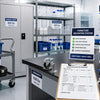
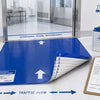
 Advanced multi-layer Cleanroom Sticky Mats capturing particulates at the entry point of an ISO Class 7 facility.
Disinfectants & Surface Cleaning Chemistry
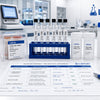
Effective sanitization is not a universal process; it requires an understanding of chemical compatibility and microbial kill times. The selection of Disinfectants & Surface Cleaning agents must be tailored to the specific bio-burden of the lab. While 70% Isopropyl Alcohol (IPA) remains the gold standard for rapid evaporation and broad-spectrum efficacy, 2026 protocols often demand specialized phenolic or quaternary ammonium compounds for hard-to-kill fungal spores and hardy viruses. The concentration is key: 70% IPA denatures proteins more effectively than 99% IPA because the water content facilitates the penetration of the cell wall.
Material science plays a critical role in chemical selection. For specialized cleanroom surfaces like high-grade 316L stainless steel or polymer benches, the dwell time (the duration a surface remains wet) is paramount. Lab managers must ensure that Disinfectants & Surface Cleaning chemicals are compatible with the surface to prevent pitting or oxidative corrosion, which creates microscopic "hiding spots" for bacteria. Many 2026-grade disinfectants are now available in "low-residue" formulations to eliminate the need for a post-disinfection rinse with deionized water, which itself can be a source of re-contamination.
Mechanical Removal: Lab Wipes & Wipers
The tool used to apply a disinfectant is as important as the chemical itself. Lab Wipes & Cleanroom Wipers are engineered to be "lint-free," a term that refers to the material's resistance to shedding fibers during mechanical agitation. In 2026, the industry has moved toward laser-edged polyester knits and non-woven blends that have undergone proprietary laundering processes to remove ions and particles. Wiping is a mechanical process of entrainment; the wiper must trap the particle within its structure rather than merely pushing it across the surface.
When selecting Lab Wipes & Cleanroom Wipers, lab managers must evaluate the "sorbency capacity"—the amount of liquid the wiper can hold and release. In high-precision environments, a wiper that leaves "high-spots" or streaks can lead to uneven disinfection. The 2026 standard for cleanroom wipers involves USP <797> and <800> compliance, ensuring that the wipers are compatible with hazardous drug compounding and sterile preparation. The use of pre-saturated wipers has seen a 40% increase in 2026, as they provide a consistent ratio of chemical to surface area, eliminating the human error involved in manual spraying.
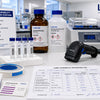
 Precision surface decontamination using laser-edged Lab Wipes & Cleanroom Wipers in a unidirectional pattern.
Advanced Hand & Surface Sanitizers
Even with double-gloving protocols, the role of Hand & Surface Sanitizers within the gowning area and auxiliary zones cannot be overstated. Hand hygiene remains the foundation of all aseptic techniques. Modern Hand & Surface Sanitizers in 2026 are formulated with emollients that prevent skin cracking—a common source of epithelial shedding—while maintaining a surgical-grade log reduction of pathogens. These sanitizers must be compatible with nitrile gloves to prevent material degradation or increased permeation rates.
Beyond personal use, these sanitizers are frequently utilized for "spot-cleaning" during active lab sessions. If a tool is dropped or a surface is touched by a non-sterile object, a rapid-acting surface sanitizer provides an immediate corrective action. To maintain 2026 OSHA standards for workplace safety, these Hand & Surface Sanitizers must be non-volatile enough to prevent respiratory irritation in confined cleanroom spaces while remaining potent enough to meet EPA List N requirements for emerging viral pathogens. The adoption of touchless dispensing systems has become a baseline requirement to prevent the sanitizer bottle itself from becoming a cross-contamination vector.
2026 Standards & Performance Matrix
Navigating the regulatory landscape in 2026 requires an understanding of how different consumables satisfy specific standards. Whether it is the particulate shedding limits of wipers or the chemical breakthrough times of finger cots, every product must be backed by technical data sheets. The table below outlines the performance benchmarks for modern sanitization supplies:
| Category | Primary Material | 2026 Standard | Performance Rating |
|---|---|---|---|
| Lab Wipes & Cleanroom Wipers | Laser-cut Polyester | ISO Class 3-5 | < 500 particles/m² (> 0.5µm) |
| Disinfectants & Surface Cleaning | Sterile 70% IPA / Quats | USP <797> / EPA List N | Log 6 Microbial Reduction |
| Cleanroom Sticky Mats & Finger Cots | Polyethylene / Nitrile | ASTM D3578 / IEST-RP | 99.9% Particulate Retention |
| Hand & Surface Sanitizers | IPA/Ethanol/Emollients | EN 1500 / FDA Monograph | Non-Shedding / Glove Compatible |
Frequently Asked Questions
- Question: Why is "lint-free" critical for 2026 Lab Wipes & Cleanroom Wipers? In 2026, many lab processes involve microfluidics or nanotechnology where standard cellulose wipes shed thousands of fibers per swipe. "Lint-free" polyester knits use continuous filament threads that do not break down during use, preventing the clogging of microscopic channels and ensuring that optical sensors remain clear for accurate data collection.
- Question: Can I use standard Disinfectants & Surface Cleaning agents on all polymers? No. Some high-performance plastics used in lab equipment can undergo "environmental stress cracking" when exposed to certain solvents. It is essential to consult the equipment manufacturer's compatibility list to ensure the disinfectant does not compromise the structural integrity of the gear or lead to chemical leaching.
- Question: How often should I change Cleanroom Sticky Mats & Finger Cots? Sticky mats should be peeled as soon as the top layer shows visible loading or loses its tackiness, which is typically every 10-20 entries in a high-traffic lab. Finger cots should be replaced whenever a technician exits the immediate work zone or if there is any suspicion of a micro-tear, as their breakthrough time against skin oils is finite.
- Question: Is there a difference between industrial and lab-grade Hand & Surface Sanitizers? Yes. Lab-grade sanitizers are typically filtered to 0.2 microns to remove particulates and are often packaged in double-bagged, sterilized containers to meet the requirements of ISO Class 5 and below. Industrial grades may contain fragrances or dyes that can act as contaminants in sensitive analytical chemistry or cell culture environments.
- Question: What is the correct wiping technique for Lab Wipes & Cleanroom Wipers? You should never use a circular motion. The 2026 best practice is a unidirectional "pull and lift" technique with overlapping strokes. This ensures that contaminants are moved from the cleanest area to the dirtiest, rather than simply being redistributed across the surface.
Effective cleanroom management in 2026 is no longer about just following a schedule; it is about the rigorous selection of specialized materials. Lab managers must audit their current inventory to ensure that Lab Wipes & Cleanroom Wipers meet laser-edge shedding standards and that Cleanroom Sticky Mats & Finger Cots are correctly placed to intercept ingress at transition points. By standardizing your Disinfectants & Surface Cleaning protocols around chemistry-matched solutions and utilizing validated Hand & Surface Sanitizers, you can guarantee both regulatory compliance and the integrity of your research results. A quarterly audit of your consumables’ technical data sheets (TDS) is the most effective way to prepare for 2026 regulatory inspections and prevent costly cross-contamination events.
-
Posted in
Safety & Consumables